Small Children, Big Seas – How We Keep Our Family Safe at Sea
Two young children, a 44-foot sailing yacht and several thousand nautical miles through European waters. From the Baltic and North Seas to the English Channel and the Atlantic coast of France, our family has gathered experiences that may prove useful to others dreaming of sailing long distances with young children. As captain of SeaBee III and father to Bianca and Bentley, I have discovered how having children aboard influences everything from route planning and weather decisions to safety procedures and everyday life at sea.
By Kjell-Ola Kleiven · Brest, France
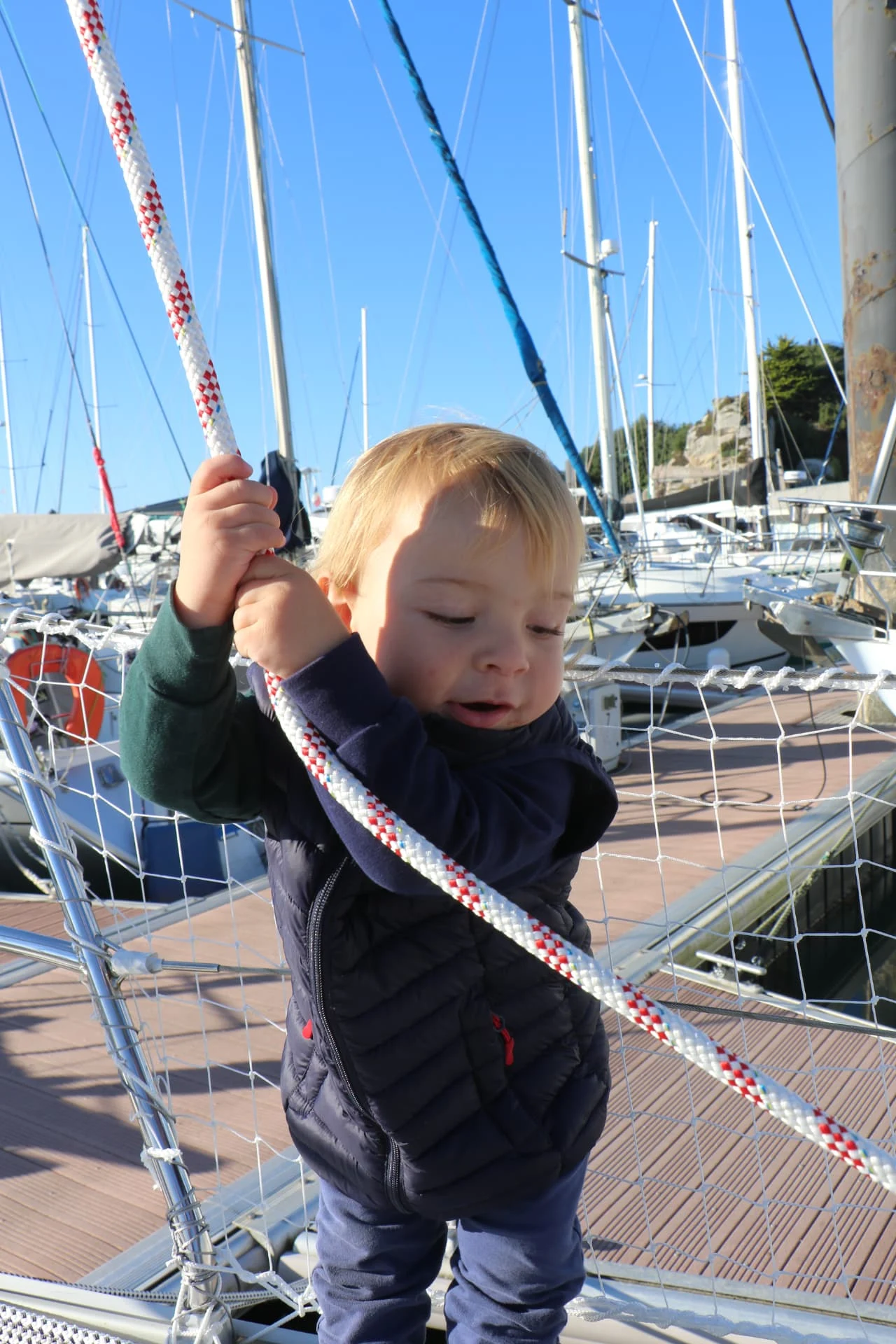
It is easy to underestimate just how much a five-year-old and a one-year-old can change life aboard a sailing yacht. I have spent many years on the water and know our boat well. Yet setting off on a long voyage is an entirely different experience when you are also responsible for two young children.
For me, two roles come together every day. As captain, I am responsible for the boat, navigation and the decisions we make along the way. As a father, my first concern is that Bianca and Bentley are safe, comfortable and able to enjoy the journey.
Since leaving Norway, SeaBee III has carried us through the Baltic Sea, the North Sea, the English Channel and south along the French coast. We have visited more than fifty harbours, covered several thousand nautical miles and are now in Brest, on the western edge of Brittany.
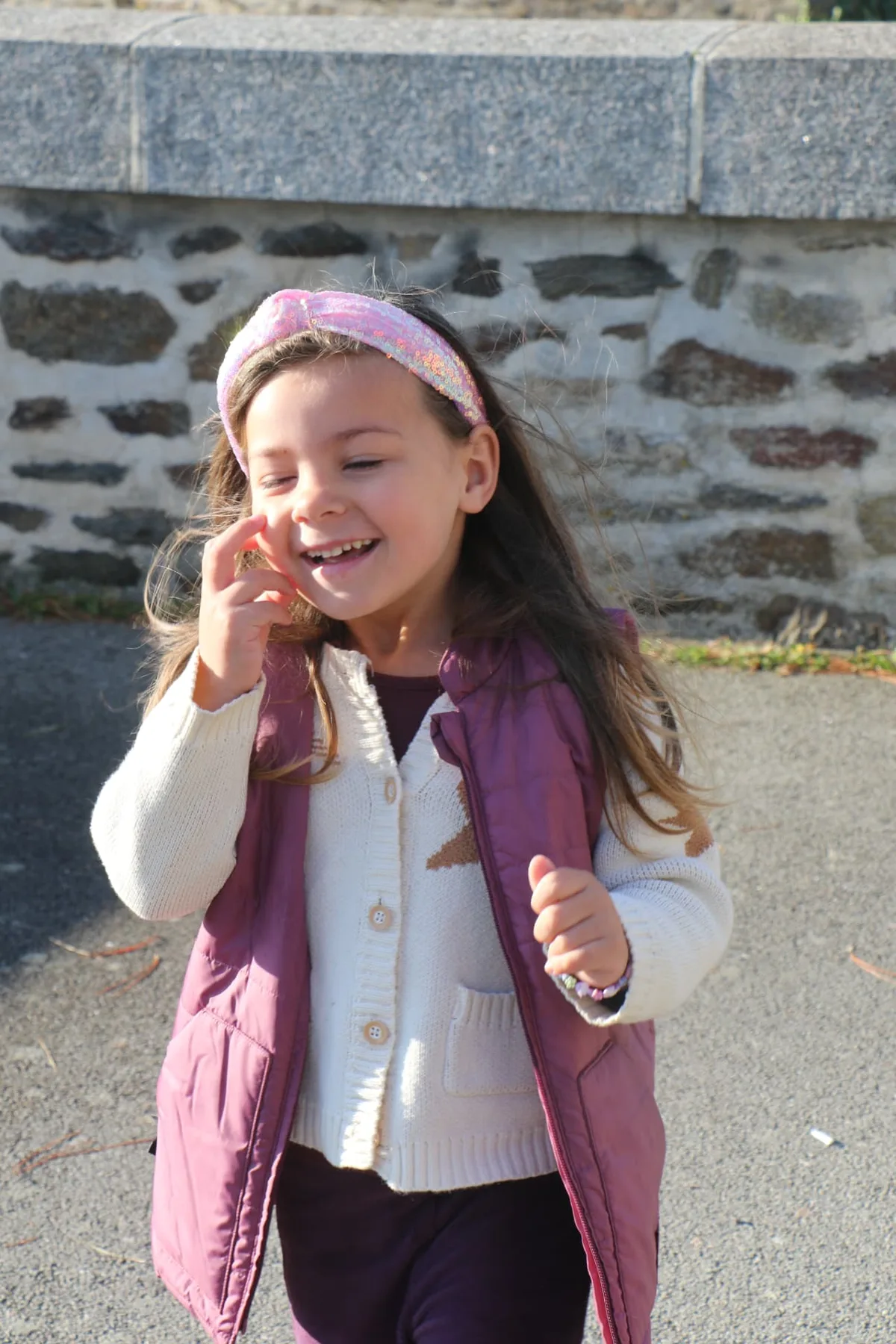
Our home is a 2007 Bavaria 44 Vision, a sturdy cruising yacht measuring almost 14 metres. I live aboard with Benedicte and our children, five-year-old Bianca and Bentley, who will soon be eighteen months old.
Other parents have asked how we dare undertake such a journey, what safety equipment we carry and how we manage everyday family life when the weather becomes challenging.
After several months at sea, I have developed quite a few thoughts on the subject. Some concern seamanship and navigation; others involve the familiar challenges of raising young children.
A poor night's sleep, a child who needs attention or a delayed lunch can all affect the course of a sailing day. The difference is that we are at sea, where the consequences of poor judgement can be considerably greater than they would be at home on land.
Every Voyage Begins with the Weather Forecast
One of the biggest differences between an ordinary sailing holiday and living aboard for an extended period is our relationship with time. When you have only a few weeks of holiday, there is a natural temptation to make the most of every available day. I have gradually become more interested in making the most of the right days.
Before leaving harbour, we study several weather forecasts. We examine wind direction and strength, wave height, wave period and how conditions are expected to develop throughout the day. Along the French coast, tides and currents are equally important considerations.
I pay particular attention to what awaits us at our destination. A pleasant passage can end with a surprisingly demanding harbour manoeuvre if the wind has increased or the current is running across the entrance. With two young children aboard, I want to have as much control as possible over precisely these situations.
We therefore try to arrive at unfamiliar harbours in daylight. I study the approach beforehand, check the available depth and usually identify an alternative harbour in case circumstances change. SeaBee draws 2.20 metres, so understanding charted depths, tidal heights and local restrictions is essential.
We also try to avoid long passages into strong headwinds. The yacht can withstand considerably more than our family would necessarily find comfortable, and I see little reason to make the journey harder than it needs to be.
Sometimes this means changing our plans. On other occasions, it means remaining in the same harbour for several days. We have done this repeatedly since leaving Norway, and more often than not, it has proved the sensible decision.
Lifejackets Are Non-Negotiable
There are few things I take more seriously aboard a sailing yacht than the possibility of someone falling overboard. With young children, that consideration must influence both the way the yacht is arranged and the rules we follow.
We pay particular attention to lifejackets. They must match the children's actual weight and size, fit correctly and provide sufficient buoyancy. For very young children, a properly designed lifejacket with a supporting collar, crotch strap and inherent buoyancy is generally a more appropriate choice than a simple buoyancy aid.
Children grow quickly, and lifejackets need to be checked and adjusted regularly. A jacket that is too large can be dangerous if a child ends up in the water.
Wearing a lifejacket on deck and around pontoons is a fundamental rule. The same applies in the cockpit whenever conditions and the level of protection require it. But a lifejacket is never a reason to relax our supervision. With Bianca and Bentley aboard, one of us must always know where the children are and be watching them.
I also believe it is sensible to familiarise children with their lifejackets through play and practice in safe, controlled surroundings. The equipment should feel familiar, and as they grow older, they can begin to understand why we wear it.
We try to make the rules understandable, too. Bianca is old enough to learn what she may do independently and when she must wait for an adult. Bentley is still so young that the responsibility rests entirely with us.
A Home That Never Quite Stays Still
It is easy to forget how differently a sailing yacht behaves at sea compared with when she is safely moored in harbour. An open drawer, a coffee cup on the table or an unsecured object can quickly become a problem when the boat begins to heel.
Before setting off, we try to keep everything tidy and secure loose equipment. Heavy items belong low down, cupboards must close properly, and the children's sleeping arrangements must take the yacht's movement into account.
The cockpit is an important living space for our family. We spend a great deal of time there when conditions allow, and it is where I steer the boat and monitor our surroundings. Yet it also contains equipment that young children must never interfere with. Winches, sheets and other running rigging can come under enormous loads within seconds.
This is something we must consider even when the boat is stationary. Children are naturally curious, and SeaBee has no shortage of fascinating things to investigate.
During a passage, the children need a safe place to stay. When conditions become rough, below deck may be the better option, provided they are supervised and the area is protected against falls and unsecured objects.
For Benedicte and me, it is equally important that SeaBee functions as a proper home. The children have their own belongings, books, toys and familiar routines. There must be room for play and relaxation, even when we are far from land.
When One Adult Has to Manage Alone
One of our most valuable lessons concerns how Benedicte and I divide responsibilities.
With two young children aboard, we have to accept that one of us will sometimes be completely occupied with them. Perhaps somebody needs feeding, is ready for a nap, feels unwell or simply wants attention.
At those moments, the other adult must be capable of handling the yacht.
SeaBee is equipped with a chartplotter, autopilot, AIS and VHF radio, but these are aids rather than substitutes for good seamanship. The autopilot makes longer passages less demanding, but someone must always maintain a proper lookout and be ready to take control if anything unexpected happens.
I believe both adults on a family sailing voyage should understand the yacht's main systems, know how to operate the engine, navigate and respond to an emergency. The same applies to VHF communication and emergency equipment.
We also need to consider situations in which one of us must take charge alone. What happens if the autopilot fails? How do we maintain control if the engine stops during a harbour approach? How do we carry out a demanding manoeuvre when the other adult is looking after Bianca and Bentley?
Such questions are considerably easier to answer when they have been discussed and practised beforehand.
Every Parent's Greatest Fear
A person overboard is one of the most serious emergencies that can occur on a sailing yacht. With young children, the consequences can be even more severe.
Prevention is our first priority. We therefore insist that the children are directly supervised whenever they are outside. Guardrails and safety netting provide additional protection, but they cannot eliminate the possibility of someone falling into the water.
A correctly fitted safety harness and tether can provide another layer of protection in certain circumstances. The tether must be attached to a suitable strong point and be short enough to prevent the child from reaching the water. A tether that allows a child to fall overboard and be dragged alongside the hull can create an extremely dangerous situation.
Anyone sailing with children should also have a clear plan for what to do if somebody falls into the sea.
The crew must know how to raise the alarm, maintain visual contact, mark the position and return the yacht in a controlled manner. Equally important is having a practical method of recovering the person from the water.
In cold seas, time can be critically short.
I therefore recommend practising man-overboard procedures in safe conditions. A buoy or other suitable training object can be used, and both adults should be familiar with the procedure.
The Equipment We Hope Never to Need
SeaBee carries a liferaft, EPIRB, AIS, VHF radio and dedicated man-overboard equipment. These are items we hope never to need in a serious emergency, but we want them ready if the unexpected happens.
Our EPIRB can transmit a satellite distress alert if we need assistance. VHF is our primary means of communicating with nearby vessels and maritime rescue services, while AIS helps us monitor commercial and recreational traffic. Of course, not every vessel transmits an AIS signal.
The liferaft is intended for situations in which abandoning the yacht becomes unavoidable. Such an evacuation would be challenging under any circumstances, and considerably more complicated with two young children.
It is therefore important to understand how the raft is deployed, how everyone can board safely and which essential items should be taken. An easily accessible grab bag containing necessary medication, communications equipment, documents and other critical supplies is a sensible precaution.
I also believe families should discuss how responsibilities would be divided in the event of an evacuation. Who looks after which child? Who handles the liferaft? How do we ensure that everyone gets out safely?
A plan cannot eliminate risk, but it can make it easier to act effectively when the situation demands it.
Food, Sleep and the Less Obvious Side of Safety
Something I have become increasingly aware of during our journey is just how much ordinary family life affects safety at sea.
When Bianca or Bentley is tired, hungry or unsettled, they naturally need more attention from us. If we are simultaneously navigating difficult waters or preparing to enter an unfamiliar harbour, the demands on everyone increase.
We therefore try to keep food and drinks readily available during passages. Meals are often prepared before departure so that we do not have to spend unnecessary time cooking if conditions become uncomfortable.
Rest matters just as much. We try to organise our days so that the children can eat and sleep reasonably normally, although life aboard does not always follow the clock.
I have also become more conscious of how important it is for the adults to rest. Lack of sleep affects concentration and judgement, neither of which is desirable when you are responsible for a yacht, navigation and young children at the same time.
Seasickness is another consideration. Young children may struggle to explain how they feel, and the signs can range from unusual quietness and paleness to nausea and a loss of appetite. It is important to recognise these changes, provide fluids and rest, and adjust the passage if necessary. Any medication for young children should be discussed with a doctor or pharmacist beforehand.
When Medical Help Is Far Away
On a longer passage, there is no guarantee that a doctor or pharmacy will be within easy reach.
I therefore believe medical preparedness deserves as much attention as the yacht's technical safety equipment. A properly stocked first-aid kit, thermometer, essential medications and knowledge of how to manage injuries and illness should all form part of the preparations.
It is also sensible to identify medical facilities along the planned route. If a child has particular medical needs, these must influence decisions about passage length, suitable weather windows and how far offshore the family is prepared to sail.
A first-aid course that includes emergency care for children can be an excellent investment before a longer voyage. So can learning how to request medical assistance over VHF and through maritime rescue services.
Harbour Manoeuvres with Two Small Children
Some of the moments requiring the greatest concentration during our journey have come when arriving in harbour.
SeaBee is almost 14 metres long and 4.40 metres wide. Manoeuvring a yacht of this size between other vessels, particularly with a crosswind or current, demands attention from everyone handling the boat.
At such times, the children must be in a designated safe place.
We do not want Bianca and Bentley moving around on deck while we are handling mooring lines or navigating confined waters. Nor do we want either of us suddenly having to abandon an important task to retrieve a child who has wandered somewhere they should not be.
I therefore plan the arrival before entering the harbour. Mooring lines and fenders need to be ready, we must know where we are going, and Benedicte and I need a shared understanding of our respective responsibilities.
If there is strong wind, current or limited space, I have no hesitation in asking harbour staff or fellow sailors for assistance.
Pontoons require attention as well. Along the Atlantic coast, tidal ranges can be considerable, and the distance between the yacht and the pontoon changes throughout the day. With young children, this calls for particularly close supervision.
Finding a Different Rhythm at Sea
After several thousand nautical miles, my relationship with distance has changed considerably.
A successful day at sea is no longer measured simply by how many miles we have covered. It is just as much about how our family has felt throughout the passage and how we arrive at our destination.
We are happy to undertake longer passages when conditions are favourable, but with the children aboard, we try to avoid making the days unnecessarily demanding. A 40-nautical-mile passage can feel quite long in rough seas, while a considerably greater distance may be perfectly comfortable with favourable winds and calm conditions.
We have also discovered that some harbours deserve more time than originally planned. Sometimes the weather keeps us there; on other occasions, we enjoy a place so much that we simply want to stay.
Along the way, we have found that this journey offers far more than sailing itself. We have visited small coastal communities, met people whose paths would otherwise never have crossed ours and gained an insight into everyday life along Europe's coastline.
Bianca and Bentley experience much of this alongside us. They encounter new places, languages and people while the boat remains their familiar home.
For me, the opportunity to spend so much time together as a family is one of the greatest rewards of the journey.
Children Still Need to Be Children
Although safety is a central part of our daily lives, Benedicte and I are equally determined that the children should enjoy living aboard.
Bianca is beginning to understand more of what happens around her. She can help with small tasks and learn why we do things in particular ways. As she grows older, I hope she will develop a greater understanding of the boat, navigation and life at sea.
Bentley is still so young that his experience of the journey is shaped mainly by family, familiar routines and the endless stream of new things to look at.
We try to give them a childhood that includes ordinary activities too. Toys, books, walks ashore, time on the beach and the simple pleasure of being together.
Our reason for embarking on this journey was to spend more time as a family, explore new places and allow our children to grow up surrounded by experiences different from those we knew ourselves.
Safety therefore has to fit the life we actually lead, complete with nappy changes, meals, bedtimes and young children whose plans rarely coincide perfectly with those of the adults.
Our Most Important Advice for Other Sailing Families
For families considering an extended sailing voyage with young children, there are several lessons I would particularly like to share.
- Take time to plan properly. Study the weather, currents, tides, harbour approaches and alternative routes. Build in generous margins and be prepared to change your plans.
- Choose lifejackets carefully. Children need approved lifejackets that fit their size and weight and are correctly secured. Check the fit regularly.
- Make the yacht child-friendly and safe. Secure hatches, cupboards and loose equipment. Consider safety netting and other protective measures, but remember that these are never substitutes for supervision.
- Agree on responsibilities between the adults. Both should be capable of handling the yacht, and it should always be clear who is responsible for the children when a situation demands concentration.
- Practise emergency procedures. Man-overboard recovery, engine failure, distress communications and evacuation should all be familiar procedures before they are ever needed.
- Take the children's needs seriously. Food, sleep, rest and familiar routines make the journey more comfortable for everyone. Exhausted parents and unsettled children are a poor combination when conditions become challenging.
- Prepare for medical emergencies. Carry appropriate first-aid equipment and necessary medicines, and identify the medical assistance available along your route.
- Keep the yacht in good condition. The engine, rigging, navigation equipment and safety systems should be checked regularly. Minor technical problems are usually much easier to resolve in harbour than at sea.
- Let the weather dictate your pace. An extra day in harbour is rarely a serious problem. Departing in conditions that should have been avoided can have much more significant consequences.
- Start gently. For families without experience of sailing with children, I recommend beginning with short trips in favourable conditions. This allows both adults and children to become comfortable with life aboard before attempting longer passages.
From the North Sea to Brest
Now that we are in Brest, looking back over the past few months, I find it fascinating how different the waters we have sailed through really are.
The Baltic Sea, North Sea and English Channel each present their own navigational challenges. Along the Brittany coast, we encounter large tidal ranges, powerful currents and stretches of water where weather conditions can change quickly.
I have become increasingly familiar with both our yacht and my own limitations. Experience has made me more confident in many respects, while also reminding me how much there still is to learn.
Long-distance sailing with young children is entirely possible, but it requires a willingness to adapt your ambitions to the family and the conditions.
For us, the aim has been to find a way of travelling that offers wonderful experiences while keeping everyday life manageable. I have no interest in pushing through difficult conditions simply to reach a particular harbour by a particular date.
I want to arrive with a family that is still looking forward to the next passage.
Before we leave again, I will do what I always do: study the weather, tides, currents and approach to our next destination. We will check that the yacht is ready, make sure everything we need is within easy reach and choose a passage that suits our family.
Then we will see how far we get.
After all, there is no reason to hurry.
About Sailing SeaBee
Sailing SeaBee follows our family's journey through Europe aboard SeaBee III, a Bavaria 44 Vision. Together with Benedicte and our children, Bianca and Bentley, I explore Europe's coastlines and meet people with fascinating stories to tell. Through features, interviews and personal accounts, we share experiences from our travels, with a particular interest in people, maritime communities, culture and life along the coast.