Juan Rodríguez Báez: The Man Who Belongs to the Ocean
For 47 years, the Atlantic has been Juan Rodríguez Báez’s refuge, his classroom and, at times, the source of his greatest sorrow. From a childhood marked by asthma to a life spent beneath the surface, the Gran Canaria freediving instructor has learned that the ocean offers extraordinary freedom — but demands something in return. After losing thirteen friends in the water, he has devoted his life to making sure others come home.
By Kjell-Ola Kleiven
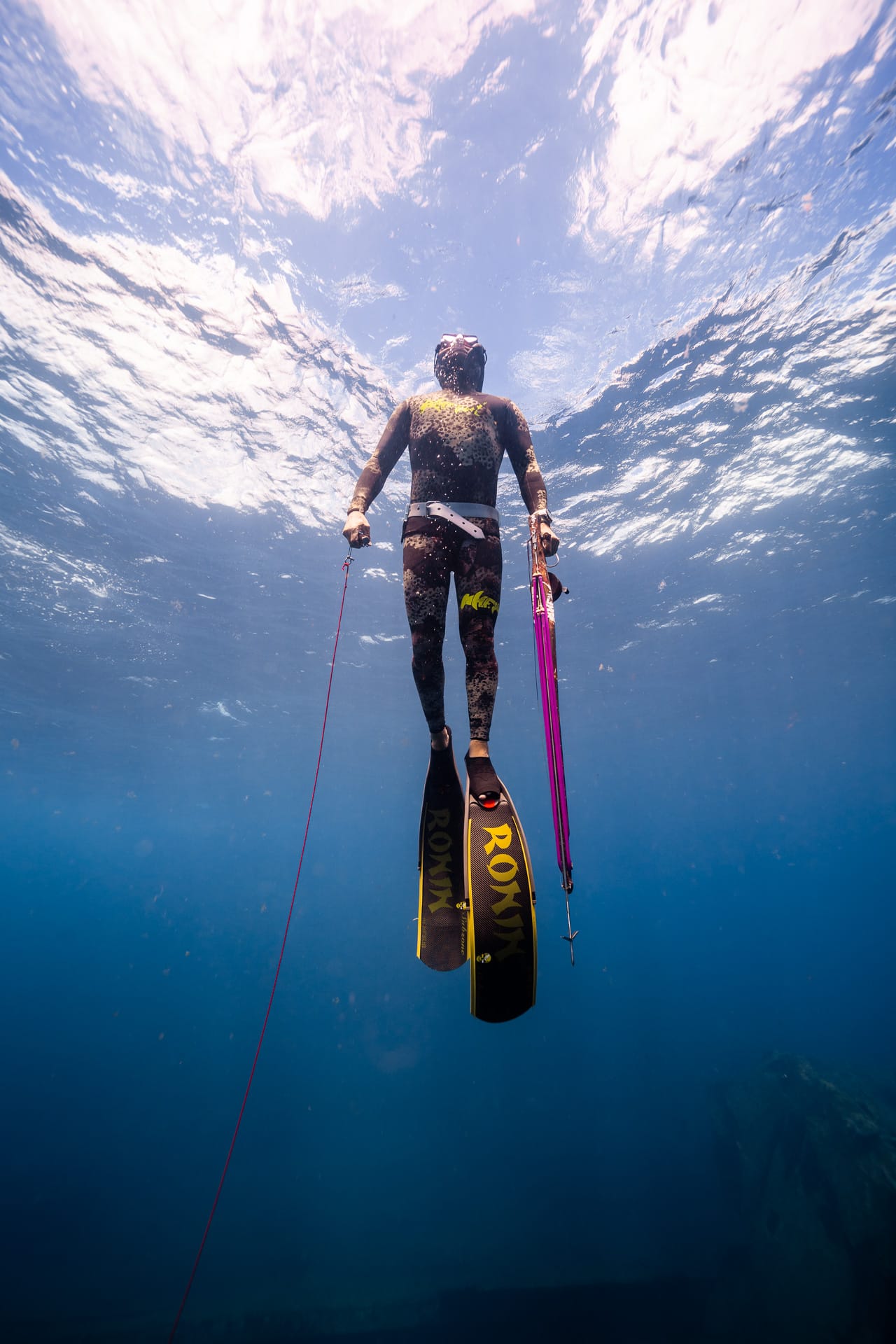
In the small fishing village on the southwestern coast of Gran Canaria where Juan Rodríguez Báez grew up, children had three ways of spending their free time. They could play football, practise traditional Canarian wrestling or go to the sea.
Juan chose the Atlantic.
It was not simply a matter of preference. Born with asthma and numerous allergies, he spent much of his childhood dealing with health problems that made ordinary activities difficult. Sport was particularly challenging, and he often felt different from the other children around him.
But something changed whenever he entered the water.
"The only place where I didn't suffer episodes or attacks was in the water," he recalls.
While his health problems restricted what he could do on land, Juan found that he could swim, move and explore in the ocean without experiencing the same limitations. For a boy accustomed to watching others do things he could not, the difference was extraordinary.
His family regarded the sea with considerable apprehension. To them, the Atlantic was a hostile environment, a place where danger was never far away.
Juan saw something else.
He remembers one childhood present more clearly than almost anything else: his first snorkelling equipment, a simple collection of fins, a mask and a snorkel.
The gift opened an entirely different world. Beneath the surface, he discovered marine life, underwater landscapes and the particular pleasure of moving through an environment that demanded his full attention.
He began spending more and more time in the water, developing the swimming and breath-hold skills that would eventually shape his life. There was no grand decision, no childhood declaration that he would one day make the ocean his profession.
He simply kept returning.
"The sea was not simply the place where I discovered a passion. It was the place where, for the first time, I could feel like any other child."
Today, Juan has spent 47 years connected to the ocean. He has competed in spearfishing at regional and national level, trained as a freediving instructor and established Subzone Freediving Gran Canaria, a school that has introduced approximately 1,500 students to the underwater world.
His career has brought sporting recognition, professional satisfaction and an intimate knowledge of the waters surrounding the Canary Islands.
It has also brought losses that have fundamentally changed the way he understands the sea.
Over those years, Juan says, thirteen of his friends have died in the water.
The number is difficult to comprehend. For Juan, each represents a person whose absence has influenced the way he teaches, dives and thinks about the ocean.
But to understand why returning safely has become so central to his life, it helps to go back to the person who first encouraged him to compete.
A Mother's Pride
Juan's mother loved fish.
She enjoyed preparing whatever her son brought home from the sea, and his fishing trips became occasions of particular happiness in the family.
Whenever he returned, she wanted to examine his catch. She would cook the fish for Juan and his brothers, taking genuine pleasure in what he had accomplished.
For the young fisherman, her reaction mattered enormously.
"Seeing her happy, feeling her pride and knowing that she valued what I was doing so much was one of my greatest motivations."
His mother's encouragement was especially significant because of the childhood he had experienced.
Asthma and allergies had restricted his ability to participate in sport. For years, physical achievement had seemed to belong to other children.
By around the age of twelve, those problems had disappeared. Juan associated the improvement with the years he had spent swimming and diving, although he describes this as his own experience rather than a medical explanation.
He was becoming increasingly accomplished in the water, and his mother followed his progress with enthusiasm.
Eventually, she suggested that he should test himself against other fishermen.
Why not enter a competition?
"To her, as a good mother, I was the best fisherman in the world."
Juan took her advice.
He began competing against experienced spearfishermen and soon achieved leading positions. Recognition followed, bringing him into contact with other athletes, established competitors and companies involved in underwater sports.
Competition demanded more than the ability to catch fish.
He needed to understand unfamiliar underwater terrain, changing currents, equipment, technique and the physical demands of descending and returning to the surface on a single breath.
He spent years improving those skills, participating in events at regional and national level and pursuing the standards expected of serious competitors.
His involvement continued for decades. He recalls remaining on competition rankings until approximately five years ago.
Yet the medals, rankings and recognition never entirely displaced the motivation that had first brought him into the sport.
"Over the years, I understood that positions, prizes and recognition are important, but there is something that has always had much more value for me."
He remembers coming home with his catch and seeing his mother's happiness.
"Before competing for a position or for recognition, I already had my greatest prize: returning from the sea and seeing the happiness in my mother's eyes."
It would take many years, and some devastating experiences, before the full significance of those homecomings became central to his professional life.
Thirteen Friends Lost in the Water
Freediving is an unusual pursuit.
There is no breathing apparatus, no continuous supply of air and no opportunity to remain underwater indefinitely. Every descent requires the diver to understand the limits of a single breath.
Spearfishing adds the demands of finding and approaching fish, making decisions at depth and returning safely to the surface.
Experience can improve judgement, efficiency and confidence. It can also create a dangerous familiarity with risk.
Juan knows both sides.
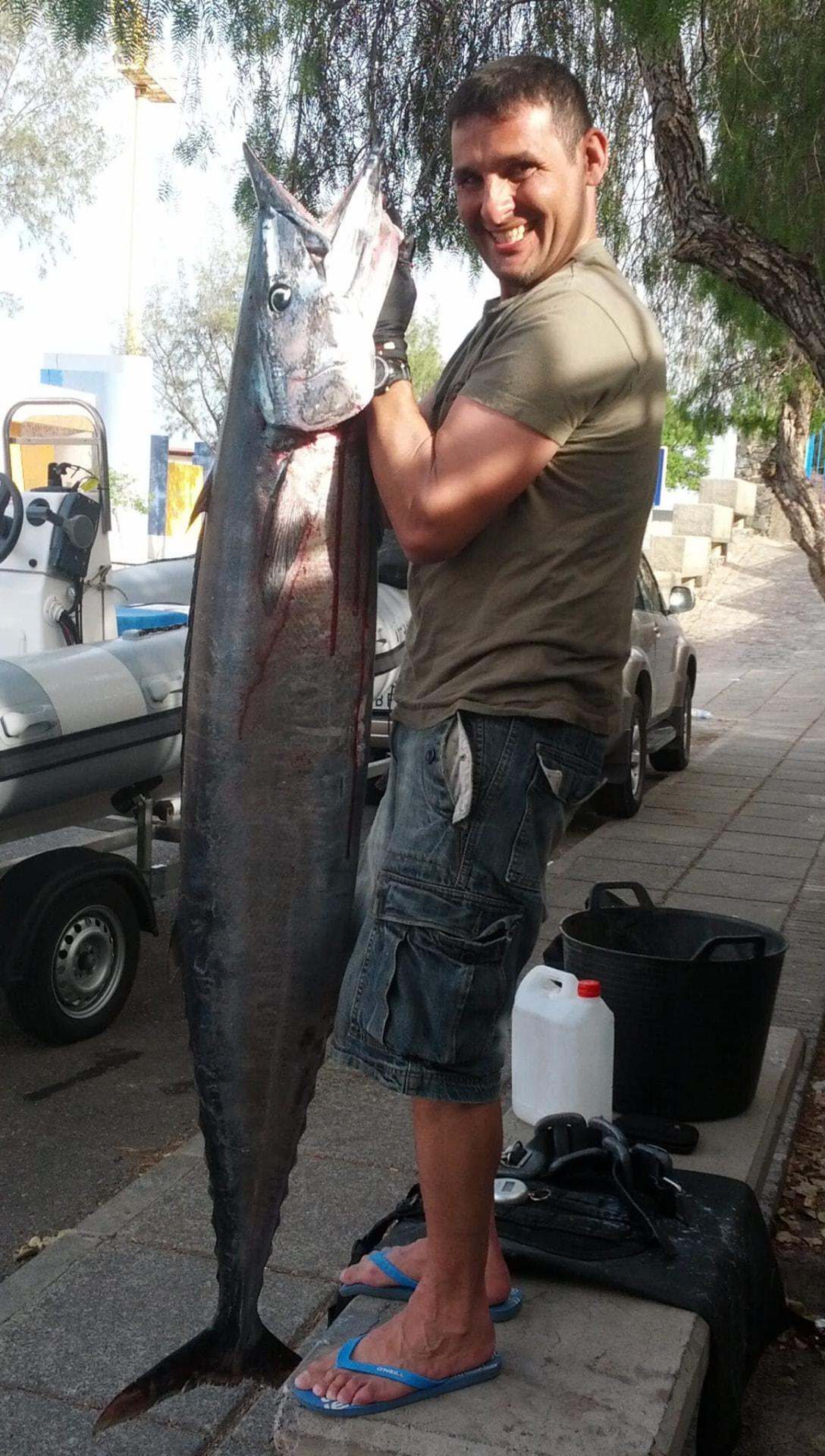
"Throughout these 47 years in the water, I have lost thirteen friends. Thirteen lives that have marked me deeply and changed the way I understand the ocean."
He does not provide the circumstances of every death in his written interview. Instead, he speaks about what those experiences have meant for him and how they changed his priorities.
The losses led him to investigate accidents, examine established practices and study the conditions in which even experienced divers can make fatal mistakes.
One particular danger has remained at the centre of his thinking: excessive confidence.
He has seen how years of successful dives can encourage a person to believe that experience offers protection against circumstances that remain inherently unpredictable.
Juan regularly shares a warning with his students. Translated literally from Spanish, it suggests that an accident may be waiting behind confidence.
"For me, true self-control consists of maintaining discipline, recognising our limits and not allowing excessive confidence to decide for us."
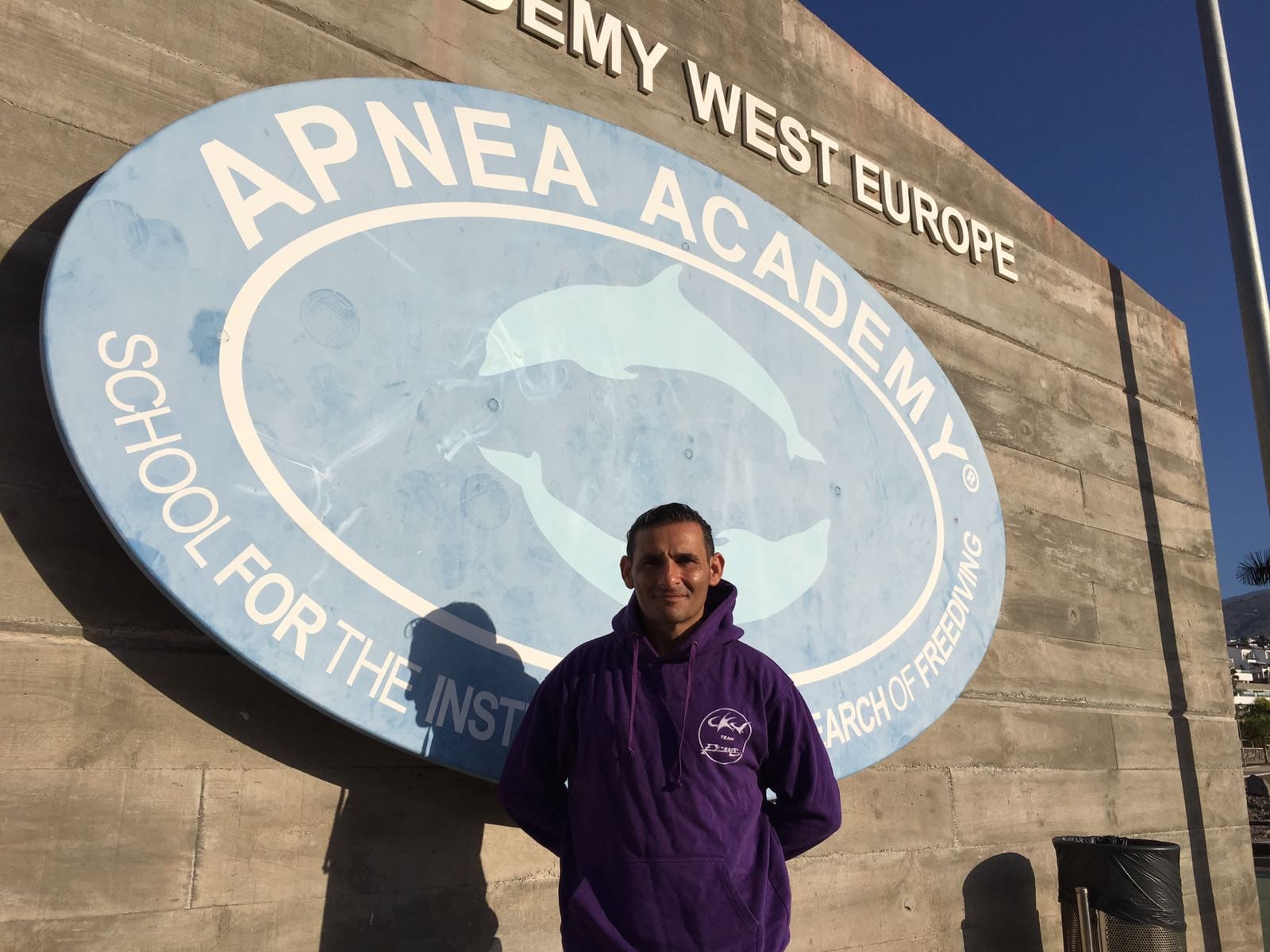
His approach to freediving developed further when he trained with Umberto Pelizzari, the Italian freediving champion and founder of Apnea Academy.
Pelizzari helped prepare Juan to become an instructor, introducing him to a broader understanding of the discipline and the responsibilities involved in teaching it.
For someone who had spent so much of his life concentrating on personal performance, it offered a different direction.
The skills Juan had developed through decades of competition could be used to help other people. And the losses he had experienced gave that responsibility an urgency that no sporting achievement could provide.
"Safety has become one of my greatest concerns and a subject that I believe I will never finish studying."
He continued examining diving accidents, questioning assumptions and looking for ways to reduce unnecessary risks.
"Today, when I teach freediving, I dedicate more time to passing on knowledge about safety than to any other aspect of the discipline."
It is a considerable change for a man who once measured progress partly through competition results.
Now, the achievement he values most is often something far less visible.
The Decision to Teach
For much of his career, Juan had been the student.
He had learned from experienced divers, competed against accomplished athletes and spent countless hours discovering what his body could achieve underwater.
Eventually, he began thinking about what should happen to all that accumulated experience.
"Especially in spearfishing, we often concentrate so much on getting a catch that we forget what is truly important: returning home."
He wanted to establish a school where technical ability would be taught alongside judgement, discipline and respect for the marine environment.
That ambition became Subzone Freediving Gran Canaria.
Based in Las Palmas, the school offers freediving instruction through Apnea Academy, with pool training, supervised open-water sessions and specialised courses for spearfishermen.
Its students arrive with different ambitions. Some want to become more comfortable beneath the surface. Others hope to improve their breath-hold skills, explore the ocean or develop the ability to dive at a more advanced level.
According to Subzone, approximately 1,500 students have attended Juan’s school over the years. Today, Subzone welcomes an average of 150 students annually across its training programmes.
"I wanted to create a school where we would not limit ourselves to teaching breathing, equalisation or descent techniques. I wanted to teach people to know the ocean, understand its risks, recognise their own limits and, above all, make responsible decisions."
Those responsibilities extend well beyond helping someone remain underwater for longer.
Increasing pressure affects the ears and sinuses. Physical exertion changes oxygen consumption, and hypoxic blackout can occur with little warning. Appropriate supervision, established safety procedures and trained diving partners are essential.
Gran Canaria offers remarkable conditions for underwater exploration, with volcanic formations, rocky reefs and sheltered coastal areas. But Atlantic swell, currents and visibility can vary greatly between locations.
Subzone uses sites including Tufía and Sardina del Norte, alongside controlled pool environments.
Juan's decades of experience allow him to introduce students to these environments while helping them understand why the conditions, rather than ambition, must determine what is sensible on any particular day.
His coaching has also extended to competitive athletes.
At the 2022 Canary Islands pool freediving championships, members of Club Magüe achieved several podium finishes. The club identified Juan as its coach and Subzone instructor, and among the results was a gold medal in static apnea for Alberto Saavedra.
For Juan, however, sporting results tell only one part of what teaching can accomplish.
Some of his most meaningful experiences involve people who arrive at the school with little confidence in the water.
One such student would leave a particularly strong impression.
A Second Chance in the Water
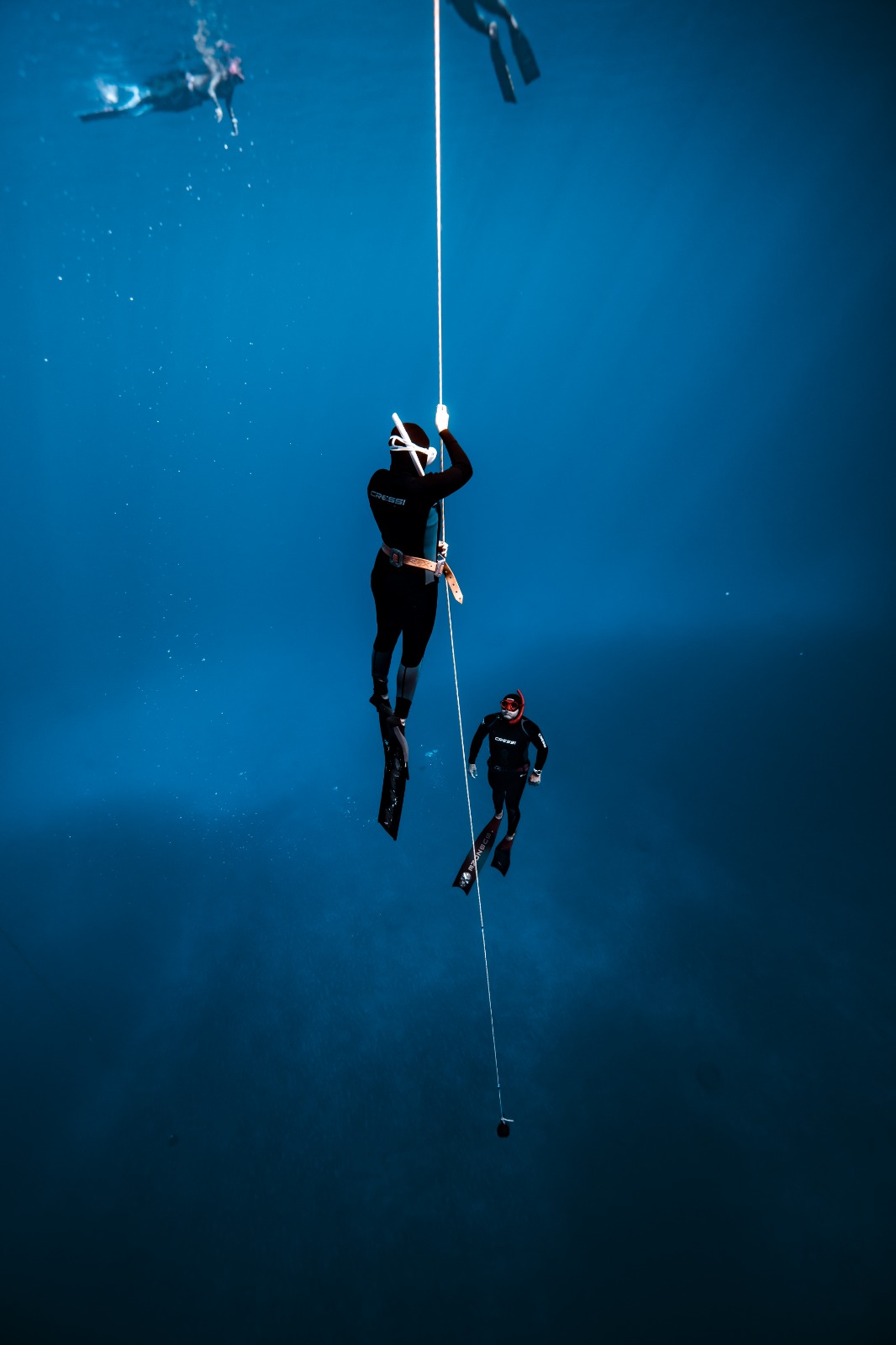
During the summer of 2026, a man approaching forty enrolled on a freediving course at Subzone.
He had some experience of the sea from his younger years, but a considerable amount of time had passed since he had attempted anything similar.
From the beginning, the course proved difficult.
The student became extremely anxious in the water and struggled to control his emotions. Despite his determination to learn, the experience became overwhelming.
There were moments of distress and tears. Juan and his colleagues listened, offered support and adjusted the pace of instruction, but the man eventually reached a point where he could no longer continue.
He left without completing the course.
For an instructor, there are limits to what encouragement can accomplish. The student's immediate wellbeing had to take precedence over finishing the programme.
Some time later, Juan received a telephone call.
It was the same man.
He wanted to come back.
Whatever had happened during his first attempt, he was determined to try again.
This time, he continued through the exercises, completed the training and obtained his certification with good results.
Juan remembers his satisfaction at seeing the man succeed.
"Not because of the certification itself, but because of everything behind it: a person who, despite having experienced a very difficult situation, had found the strength and motivation necessary to try again."
The experience stayed with him.
In competitive freediving, progress can be measured through depths, distances and breath-hold times. But teaching people to feel comfortable in the water requires patience and the ability to recognise that every student has a different starting point.
Some arrive with years of experience. Others have never ventured far from the shore. A few carry fears that make even the first exercises extraordinarily difficult.
"One of my greatest achievements is not the depth a student reaches, but seeing how someone who arrived full of fear ends up leaving with a smile and the satisfaction of having overcome their own limits."
For Juan, watching a student return and succeed after an earlier failure offered a satisfaction that needed no podium or medal.
It was enough to see the difference in the person who emerged from the water.
The Backpack He Leaves on the Beach
After almost five decades in and around the ocean, Juan still finds pleasure in the simplest aspects of diving.
One of his favourites is that nobody can telephone him.
He often tells his students that there are few opportunities in modern life to spend two or three uninterrupted hours beyond the reach of messages, appointments and everyday demands.
The Atlantic provides exactly that.
But Juan has developed a more personal way of describing what happens when he prepares to enter the water.
He imagines arriving at the beach carrying a backpack.
It contains everything that occupies his mind on land: responsibilities, unresolved problems, worries and the ordinary concerns that accumulate during daily life.
Before entering the sea, he mentally removes the backpack and leaves it on the shore.
He knows it will still be waiting when he returns.
"I enter the water and that backpack stays on land. I know that when I return it will still be waiting for me, that nobody will have stolen it, but during that time I can forget its weight."
He can spend the following hours swimming, observing marine life and concentrating on the world beneath the surface.
There are fish to watch, underwater formations to explore and an environment that continues to hold his interest after all these years.
But he has also discovered that physical silence does not necessarily bring peace of mind.
"When our mind is not relaxed, silence can become tremendously noisy."
Even underwater, a person may remain preoccupied with whatever was troubling them before they entered the sea.
Over time, Juan has learned to recognise the difference between escaping interruption and finding a genuine sense of calm.
The ocean gives him the opportunity to put his responsibilities aside for a while, without pretending that they have ceased to exist.
"For me, true freedom does not consist of escaping from life, but of finding a place where I can stop carrying it for a few hours. And that place has always been the sea."
It is an arrangement he has maintained since childhood, long before he had students to teach, competitions to prepare for or a business to run.
The sea remains the place where he feels most at ease.
And yet, after so many years spent exploring it, he is increasingly concerned about what is happening beneath the surface.
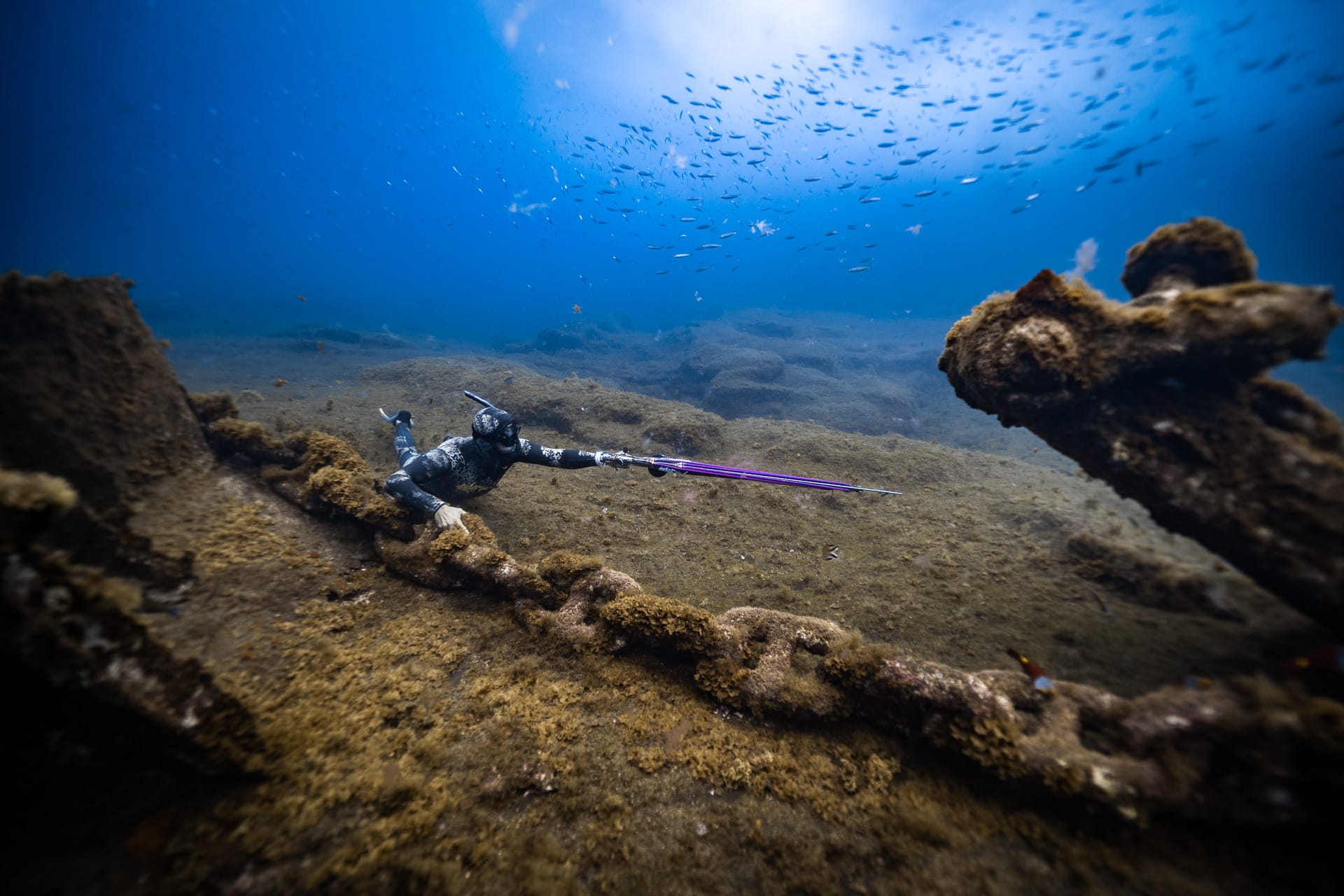
The Gran Canaria He Remembers
Juan remembers a different Atlantic.
When he began spearfishing in the waters around the Canary Islands in the 1980s, he encountered what he describes as a considerably richer marine environment.
Fish were more abundant in many of the places he frequented, and the underwater landscapes he came to know offered experiences that have become increasingly difficult to reproduce.
"After more than forty years underwater, I have witnessed a significant deterioration of marine life in the Canary Islands."
He remembers a period when many professional fishing vessels operated in African fishing grounds, while the coastal waters of the Canary Islands supported artisanal fishing, recreational angling and spearfishing.
In his view, changes in access to African fishing grounds during the 1980s contributed to greater commercial pressure on the waters surrounding the islands.
He associates part of the subsequent decline with intensive fishing practices, including traps, trammel nets and other forms of netting.
These are his observations and interpretation of the changes he has witnessed. The history of fishing around the Canary Islands is complex, and the decline of marine resources cannot be attributed to one development or fishing method alone.
Fishing pressure, environmental conditions and changes in marine ecosystems have all formed part of the wider scientific discussion.
Juan is particularly conscious of the islands' geography.
Gran Canaria and its neighbours rise steeply from the Atlantic, with deep waters close to shore and relatively narrow coastal shelves. Marine habitats and coastal fishing grounds exist within a distinctive and sometimes vulnerable environment.
His own background in spearfishing gives the subject an additional complexity.
Recreational fishermen also extract marine resources, and their activities form part of the broader debate about sustainability.
Juan believes different forms of fishing need to be understood according to their methods, intensity and cumulative impact.
He also argues that those who spend time enjoying the ocean have an obligation to help protect it.
"Precisely because we love the ocean and enjoy its resources, we must be the first to respect it, know its limits and contribute to its conservation."
For Juan, the changes are not merely a matter of fishing statistics or environmental policy.
They are visible in places he has known since childhood.
He remembers particular stretches of coastline, familiar underwater formations and waters that once held many more fish than he encounters today.
"I remember an ocean much more abundant than the one we see today. And I would like future generations to be able to enjoy that same richness that I was fortunate enough to know when I was a child."
There is a personal dimension to that wish.
The ocean that gave him such freedom as a boy is the same environment he now introduces to his students.
He wants them to discover its richness, but also to understand how easily that richness can be diminished.
The Greatest Achievement
Juan Rodríguez Báez has spent most of his life learning how to move through the ocean.
He began as a boy with asthma, a mask and a pair of fins, discovering that he could do things in the water that had seemed impossible on land.
He became an accomplished spearfisherman, entered competitions, learned from other athletes and eventually trained to teach the discipline himself.
Along the way, he has watched the marine environment change and experienced the loss of people with whom he shared his passion.
Those experiences have influenced what he now considers important.
After 47 years, Juan still regards himself as a student.
"I learn from people who know less than I do, from the conditions of the sea, from a climate that is constantly changing and, of course, from my own experiences."
He continues diving, teaching and refining his understanding of an environment he knows intimately but never takes for granted.
His students may come to him hoping to reach greater depths, hold their breath for longer or become better spearfishermen.
He will help them develop those abilities.
But he also wants them to recognise the moment when they should abandon a dive, accept the conditions as they are and return safely to the surface.
It is a lesson that connects the instructor he has become with the boy he once was.
Many years ago, Juan would return from a fishing trip to find his mother waiting at home.
She wanted to see his catch, hear about his day and prepare the fish for the family.
But first, she wanted to know that her son had come home safely.
Her pride helped encourage him into competition, and for years he pursued the achievements that came with it.
Today, having spent much of his life pushing his abilities further and having lost thirteen friends in the water, his understanding of success is different.
"The greatest achievement of an athlete is not reaching a certain depth or obtaining a great catch."
He continues:
"True success is being able to return to the surface and go home to tell the story."
JUAN RODRÍGUEZ BÁEZ
Founder and freediving instructor, Subzone Freediving Gran Canaria
Las Palmas de Gran Canaria, Canary Islands, Spain
Instagram: @subzonefreediving