PLACES & HERITAGE · BRITTANY
A Castle with a Second Life
In the countryside of western Brittany, a French entrepreneur and his family have spent more than 25 years bringing historic buildings back to life. At Château de Kergroadez, we discovered a story about ambition, belonging and the unexpected warmth of a 400-year-old home.
By Kjell-Ola Kleiven · November 2026
An Unexpected Welcome
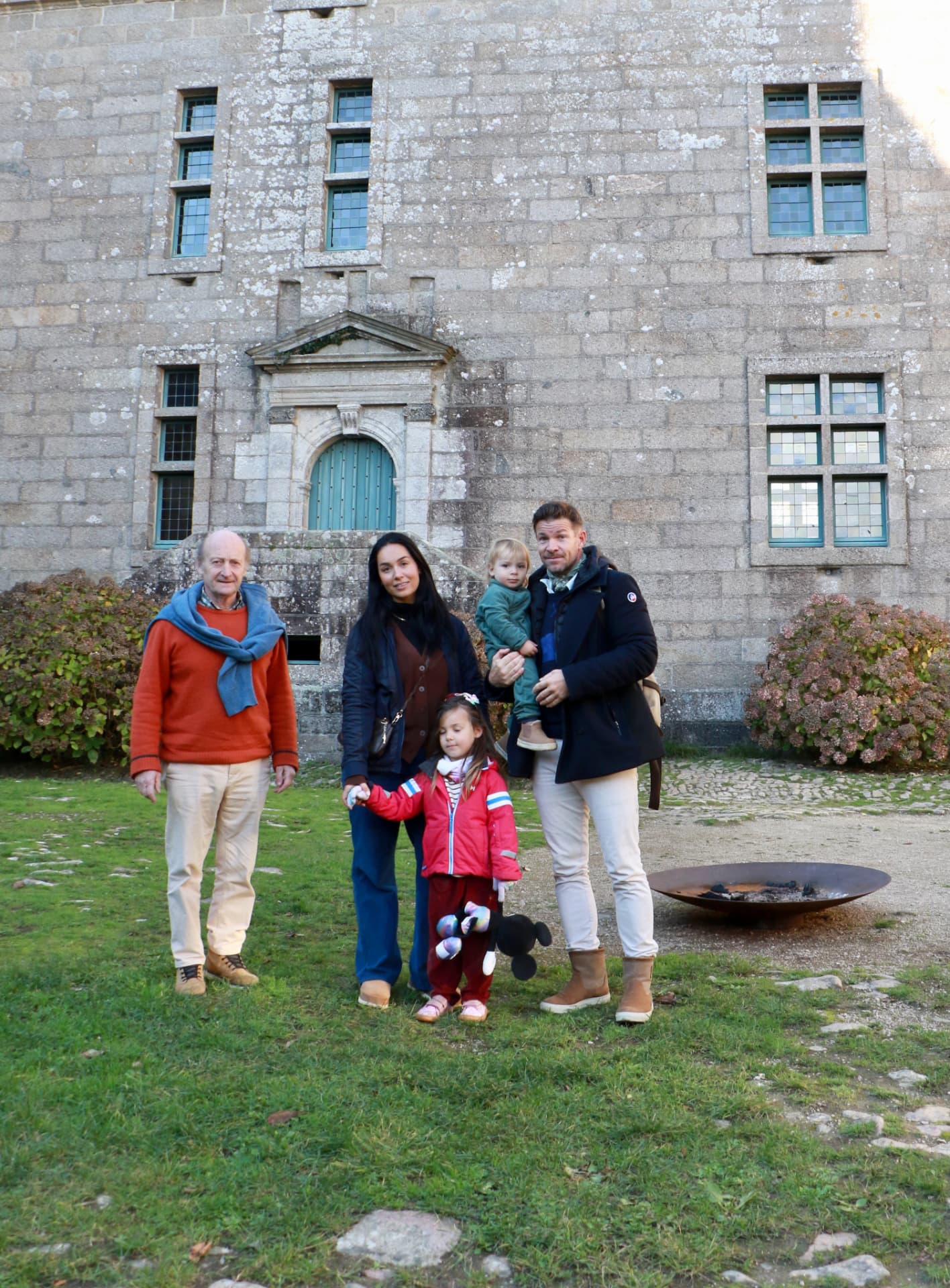
The first person to take Franck Jaclin by the hand that Saturday afternoon was our youngest son, Bentley.
Barely eighteen months old, he had little interest in formal introductions. Standing outside Château de Kergroadez, a magnificent Renaissance residence in the Breton countryside, he simply reached for our host's hand and attempted to lead him towards the entrance.
Franck, an entrepreneur who has spent more than a quarter of a century bringing historic properties back to life, seemed entirely happy to follow.
It was a small moment, but one that would come to define our afternoon.
We had travelled from Brest to discover the history of a château more than four centuries old. What we found was a family home, an extraordinary entrepreneurial undertaking and a man whose understanding of hospitality extended far beyond opening the doors of an impressive building.
A Different Kind of Château
For the past several months, our family has been travelling through Europe aboard our sailing boat, SeaBee III. After visiting dozens of harbours, we have become accustomed to discovering places from the water, approaching unfamiliar towns through their ports and marinas.
Brittany has encouraged us to explore further inland.
Beyond its fishing villages, dramatic coastline and maritime traditions lies a countryside filled with historic estates, ancient villages and remarkable personal stories.
Château de Kergroadez, near Brélès in Finistère, seemed an ideal place to begin.
Franck Jaclin had welcomed our request to visit with genuine warmth. Our correspondence suggested someone interested in more than simply presenting a historic property to a visiting journalist.
Nevertheless, as we drove through the countryside on a beautiful November afternoon, I wondered what kind of encounter awaited us.
There is something inherently intimidating about arriving at a château. Such buildings were constructed to communicate status, influence and permanence. Their architecture often reflects a world in which privilege determined who belonged inside and who remained beyond the gates.
Kergroadez certainly possesses that grandeur.
Yet within minutes of meeting Franck, the atmosphere felt surprisingly informal.
And as he began explaining the philosophy behind the estate, it became clear that this contrast was entirely intentional.
The Memory That Started Everything
Franck grew up in Lille, the historic city in northern France near the Belgian border.
When he spoke about his childhood, he returned to a particular memory: a family home where visitors were always welcome.
People came and went. Hospitality was part of everyday life. The house was somewhere people could gather and feel that they belonged.
Decades later, that memory would influence one of the most significant decisions of his life.
In 2000, Franck and his wife Delphine acquired Château de Kergroadez, an extraordinary historic property that had already witnessed centuries of changing fortunes.
Their ambition extended beyond restoring a magnificent private residence.
They wanted to create a place where people could meet, participate and share experiences. A historic estate could become something more than a monument to its own past.
It could become a living part of the community.
The idea was particularly compelling given the building's origins.
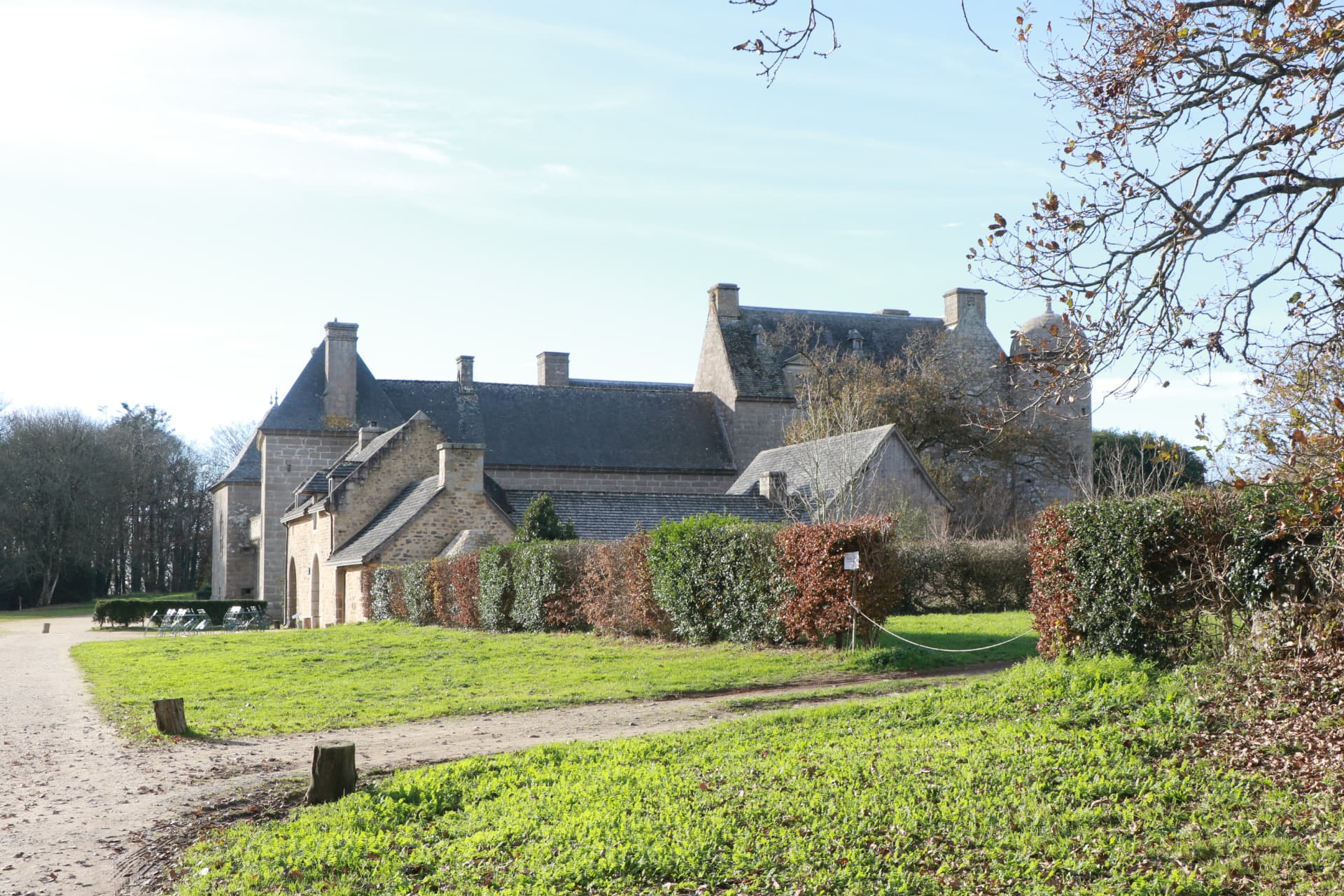
Construction of Château de Kergroadez began in 1602, following the elevation of François III de Kergroadez's estate to a marquisate by King Henri IV in 1598.
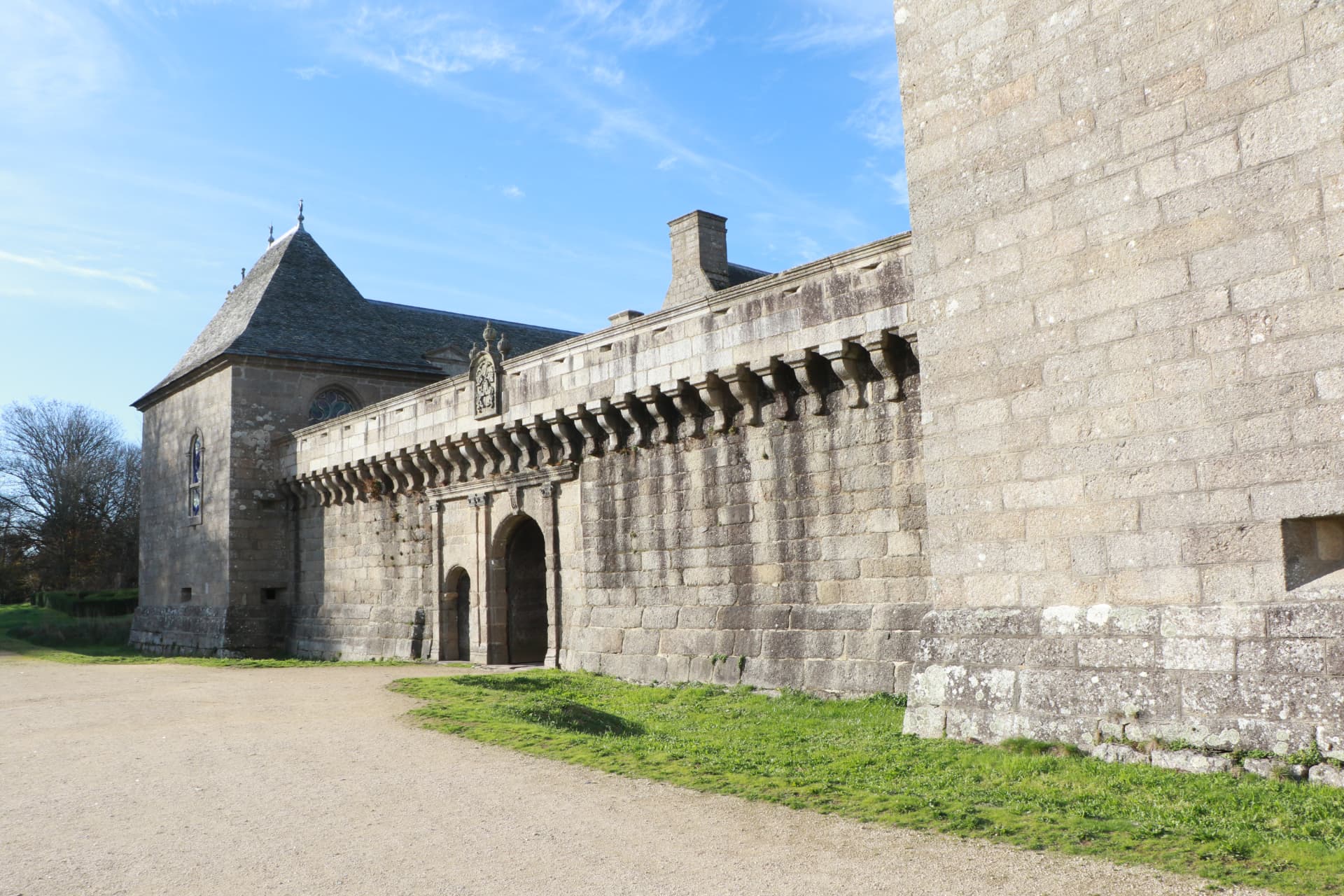
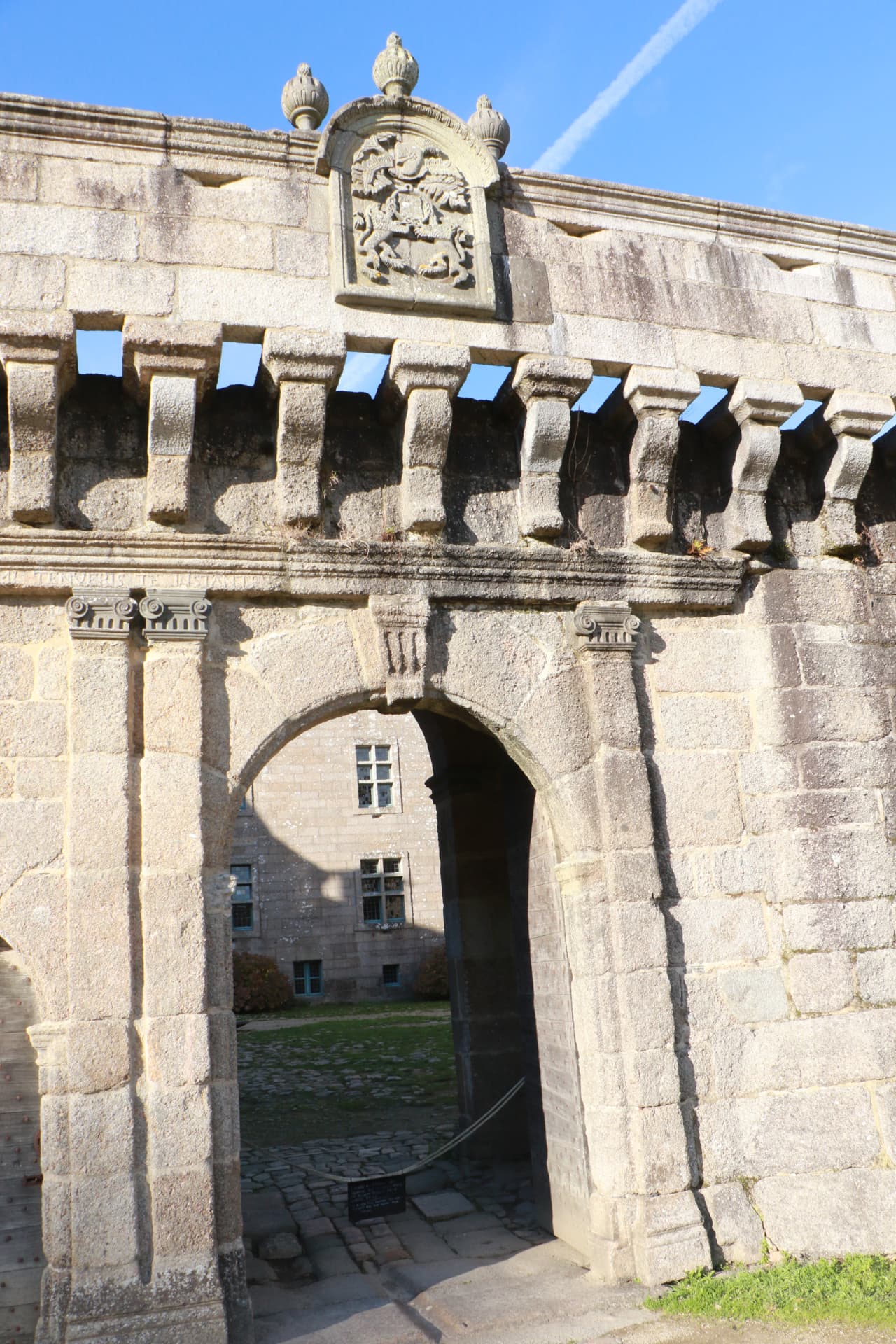
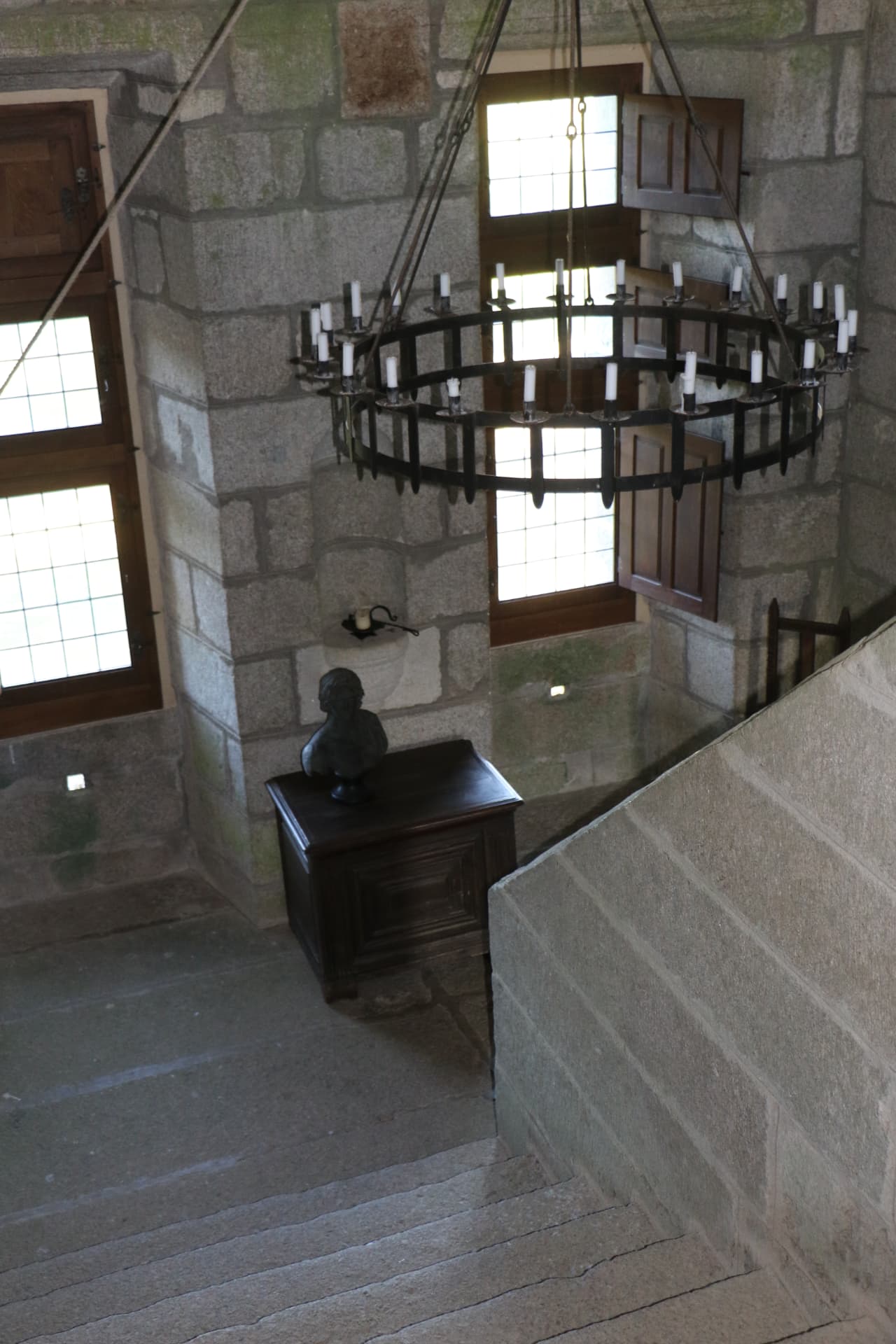
Completed in 1613, the château reflects a transitional period in French architecture, combining elements of defensive design with the symmetry associated with the Renaissance.
Its granite walls, imposing courtyard and distinctive arrangement of buildings remain powerful expressions of the ambitions of the family that commissioned it.
The centuries that followed were not always kind to Kergroadez.
During the French Revolution and its aftermath, the estate suffered considerable losses. By the early nineteenth century, much of the building had been stripped of its original fittings and materials.
A major restoration was undertaken in the early twentieth century, including the reconstruction of the roof and much of the interior.
In 1995, the château and its grounds were formally classified as a French Historic Monument.
But official protection could not remove the enormous practical challenges associated with preserving such a property.
When Franck and Delphine acquired Kergroadez, they accepted responsibility for a substantial part of Brittany's architectural heritage.
They were also beginning a project that would shape the following decades of their lives.
The Entrepreneur and the Past
Franck's route to Kergroadez was unconventional.
Before becoming involved in historic preservation and hospitality, he had built a professional life in entrepreneurship and technology.
It was a background that might initially seem far removed from the restoration of a seventeenth-century château.
Yet as our conversation developed, I began to recognise certain similarities between the two worlds.
Building a company requires imagination, financial discipline and the ability to persuade others that an ambitious idea deserves their support.
Restoring a historic property demands many of the same qualities.
Both involve uncertainty. Both require perseverance. And both depend on bringing together people with different skills around a shared objective.
At Kergroadez, Franck found a way to apply his entrepreneurial experience to a challenge that would occupy decades of his life.
Maintaining a château is expensive. Its roofs, windows, stonework and drainage systems require constant attention, while restoration work must respect the architectural character of the building.
Financial sustainability is essential, but so is finding a purpose that makes the property relevant to contemporary life.
For Franck and Delphine, the answer was to develop activities that could support the estate while encouraging people to become involved in its future.
The château would become their home, but also a place for cultural activities, encounters and shared experiences.
It was an approach that would eventually extend far beyond Kergroadez itself.
Two Hundred People and a Shared Purpose
During our conversation, Franck described the remarkable community of volunteers involved in the life of Kergroadez.
Around 200 people contribute through the associations connected to the château and its activities.
Some bring practical skills. Others help organise cultural events, historical activities or projects that connect the estate with the surrounding community.
Their involvement has become an essential part of the château's identity.
What makes this particularly interesting is the relationship between private ownership and collective participation.
Franck and Delphine own the property, but its contemporary life is shaped by a much wider community.
The volunteers contribute to something that extends beyond the preservation of stone walls and historic interiors.
They help create a place where people feel connected to their surroundings and to one another.
In a building originally constructed to demonstrate the standing of an aristocratic family, that represents a remarkable transformation.
The château remains privately owned, but its role has become increasingly connected to the public.
And the idea that began with Kergroadez has gradually developed into a much larger undertaking.
Four Penguins, One Family
The name La Route des Pingouins is wonderfully unexpected.
Translated into English, it becomes The Road of the Penguins, hardly the most obvious name for an organisation dedicated to historic buildings and hospitality.
But Franck offered us a personal explanation.
The four penguins, he told us, represent the four sons he and Delphine have raised together.
It is a charming detail, and one that reveals how closely the project is connected to the family's own story.
La Route des Pingouins was established in 2010 as a way of developing a sustainable economic foundation for the restoration and activities at Kergroadez.
The concept has since expanded into a network of historic properties, accommodation, restaurants and destinations across western Brittany, many connected to the coastal walking route known as the GR34.
Its guiding principles are heritage, nature and collective life.
Rather than concentrating on constructing entirely new buildings, the organisation focuses on finding new purposes for existing properties.
Buildings that have lost their original functions can become hotels, restaurants or places where people gather.
One example is Le Château de Sable in Porspoder, a property once used as a holiday centre for children from Brest.
Today, it operates as a hotel and restaurant near the Atlantic coastline.
The transformation illustrates an important aspect of Franck's philosophy.
A building's history need not be an obstacle to its future. It can become one of its greatest assets.
A Different Way of Discovering Brittany
The development of La Route des Pingouins has also created a different way of experiencing the region.
Brittany is celebrated for its coastline, fishing villages, seafood and maritime heritage. Yet beyond these familiar attractions lies a landscape of historic residences, former institutions and buildings whose stories are often less familiar to international visitors.
By giving some of these places new functions, Franck and his partners have created opportunities for visitors to experience the region through its architecture and local communities.
The accommodation itself becomes part of the journey.
A former holiday centre can offer a new generation of travellers an opportunity to discover the Atlantic coast. A restored historic building can provide an introduction to local craftsmanship, food traditions and cultural history.
The concept also raises a broader question about the future of tourism.
As destinations face growing pressure to accommodate visitors while protecting their cultural and environmental character, could more existing buildings be adapted rather than replaced?
For La Route des Pingouins, that question is not merely theoretical.
It has become the foundation of a business model built around restoration, local employment and long-term connections with the surrounding region.
There are considerable challenges involved.
Historic buildings rarely lend themselves easily to modern commercial requirements. Restoration can be expensive, regulations demanding and the economics of hospitality unpredictable.
But the results can also be distinctive.
A restored property carries a sense of place that cannot easily be recreated in a newly constructed building.
And for travellers interested in understanding a region rather than simply passing through it, that distinction matters.
Behind the Castle Doors
For our children, however, the most important discoveries at Kergroadez were considerably less philosophical.
Once inside, Bentley was fascinated by a knight in shining armour.
Bianca, our five-year-old daughter, discovered something even more exciting: a princess's dress.
Suddenly, the centuries of history surrounding us had become something the children could recognise.
For them, the château was not an architectural monument.
It was a place of knights, princesses and enormous rooms waiting to be explored.
Watching their excitement, I was reminded how differently children experience historic places.
Adults tend to focus on dates, architecture and the people who once lived there.
Children respond to atmosphere, imagination and the possibility of adventure.
At Kergroadez, both experiences seemed equally welcome.
And Franck appeared to enjoy the children's enthusiasm as much as we did.
Almost Like a Christmas Film
The most memorable part of our visit came when Franck invited us into his living room.
An enormous fireplace dominated the room, with a fire burning warmly inside.
A table had been prepared with apple cake and apple juice.
The children were delighted.
Benedicte looked around at the historic surroundings, the magnificent fireplace and the scene unfolding before us.
"This is almost like living in a Christmas film," she said.
It was a wonderfully accurate description.
There was something almost cinematic about the moment, although nothing felt arranged for effect.
We had arrived as visitors to a historic château and found ourselves enjoying apple cake and conversation in the warmth of someone's home.
Franck explained that he knew children enjoyed watching the flames and had made sure the fireplace was lit for our arrival.
It was a thoughtful gesture.
Here was a man responsible for a vast historic property and numerous ambitious projects, yet he had considered something as simple as what might delight two young children.
The moment brought us back to the childhood memory he had shared earlier.
The welcoming family home in Lille had found a new expression, this time within the granite walls of a château more than four centuries old.
A Life Within Four Centuries of History
As we sat together beside the fire, I became increasingly curious about Franck's everyday life.
For most people, a château is somewhere to visit.
For Franck and Delphine, Kergroadez is home.
I wondered what it must feel like to live within such enormous rooms and corridors, surrounded by the history of generations who had occupied the building before them.
What happens when the visitors leave and the estate becomes quiet?
How does someone with such an active professional life spend his evenings in a place of extraordinary proportions?
Eventually, I asked.
Franck's response was immediate.
"Well, I don't sleep much."
It was a wonderfully understated answer.
And perhaps one of the most revealing moments of our conversation.
The château itself had stood for more than four centuries, enduring political upheaval, changing ownership and periods of neglect.
Yet the man now responsible for its future seemed constantly occupied with new possibilities.
There was something fascinating about that contrast.
The building represented permanence.
Franck represented movement, ideas and the determination to create something new.
Together, they had become an unlikely but compelling partnership.
The Best Day of Our Journey
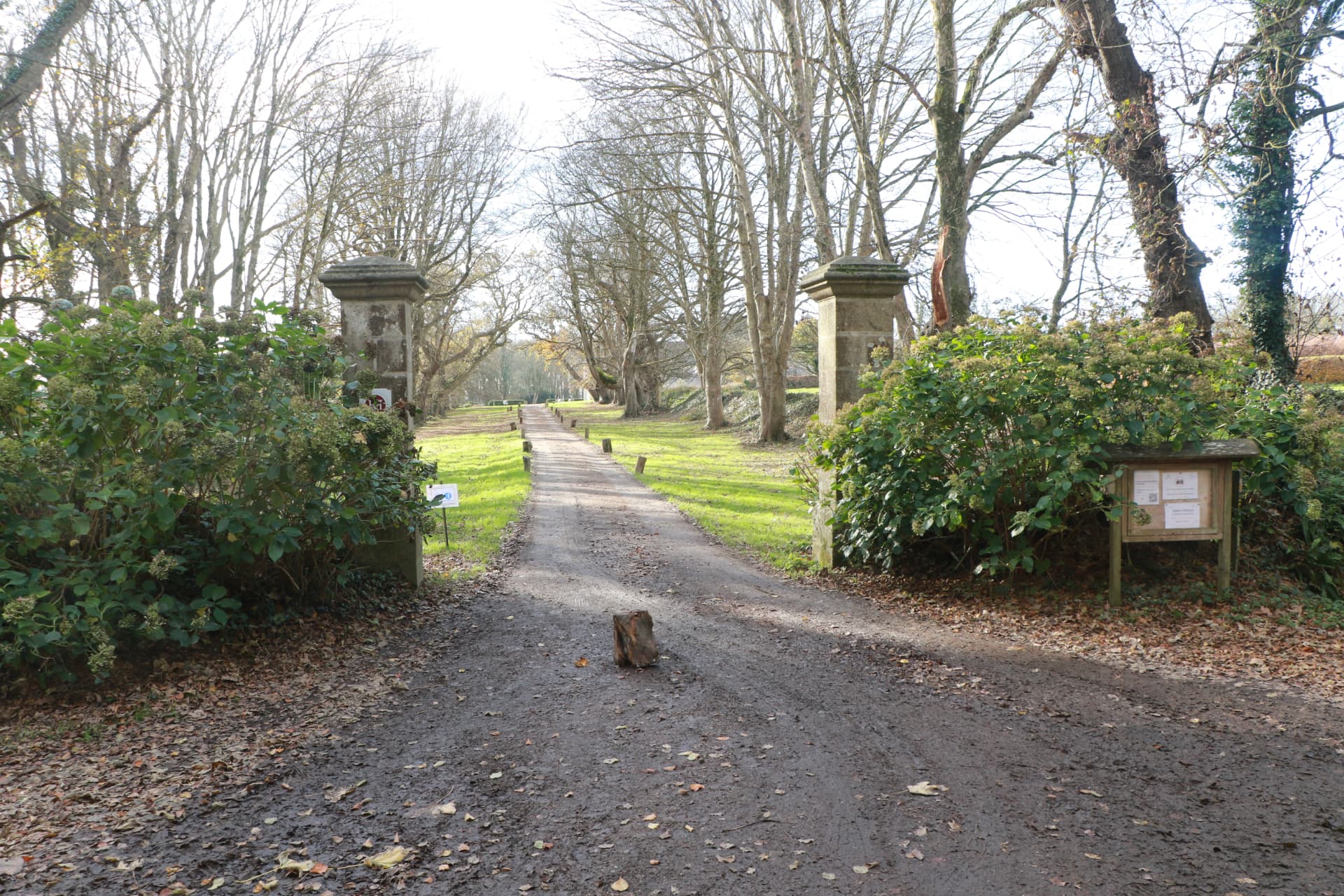
Before leaving, we explored more of the estate, including the jumping nets among the trees that provided another adventure for the children.
By then, our visit had become something quite different from the historic excursion we had originally imagined.
We had learned about architecture, entrepreneurship and the challenges of preserving historic buildings.
But what remained with us most strongly was the experience of being welcomed.
For Bentley, the afternoon had been filled with knights, enormous rooms and a new friend whose hand he had confidently taken.
Benedicte would remember the magnificent fireplace and the atmosphere of a Christmas film.
I would remember the conversations with Franck, his entrepreneurial journey and the generosity with which he had welcomed our family.
And Bianca had her own reasons for loving the afternoon.
There had been a princess's dress, a real château, jumping nets among the trees and apple cake beside a roaring fire.
Later that day, she told us it had been the best day of our entire journey.
We have travelled through numerous countries, visited dozens of harbours and experienced moments that will remain with us for years.
Yet it was an afternoon in the Breton countryside, far from the sea, that made such an impression on our daughter.
I thought about Franck's childhood memory of a home where everyone was welcome.
More than 25 years after acquiring Kergroadez, he and Delphine have created something that extends well beyond the restoration of a historic building.
They have given a remarkable place a future while preserving the simple idea that inspired them in the first place.
And for one Saturday afternoon in November, they made four visitors from Norway feel that they belonged there too.
Visiting Château de Kergroadez
Château de Kergroadez is located near Brélès in Finistère, western Brittany, northwest of Brest. Built between 1602 and 1613, the château is a protected French Historic Monument and forms part of La Route des Pingouins, the heritage and hospitality initiative developed by Franck and Delphine Jaclin.
Further information: www.kergroadez.fr and www.laroutedespingouins.fr.
Sailing SeaBee visited Château de Kergroadez on Saturday, 14 November 2026.