BEYOND TIME · THE WATCHMAKERS · PART ONE
The Art of Time
How two independent watchmakers in Nantes are bringing purpose back to mechanical watches
For centuries, the ability to measure time helped sailors find their way across the oceans. Today, when satellites tell us exactly where we are and smartphones rarely lose a second, mechanical watches continue to hold a particular fascination. In Nantes, two French watchmakers have built their company around an idea that seems almost old-fashioned: understanding what a watch needs to do before deciding how it should look. Our new series, Beyond Time, begins with Akrone.
By Kjell-Ola Kleiven · Brest, France · November 2026
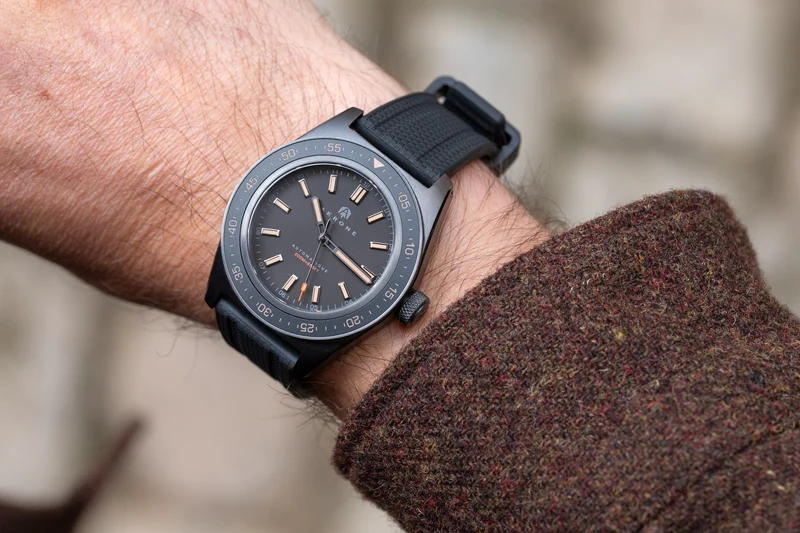
There are mornings aboard SeaBee III when the most important decision of the day is what time to leave harbour.
An hour can make the difference between catching a favourable tidal stream and spending the afternoon fighting against it. Arriving before darkness can determine whether a passage feels straightforward or becomes considerably more demanding. And after sailing through the Baltic Sea, the North Sea, the English Channel and along the French coast, our family has learned to respect both the weather and the clock.
We have a modern chartplotter, GPS, AIS and electronic navigation instruments aboard our Bavaria 44 Vision. Technology provides information that generations of sailors before us could scarcely have imagined. Yet even with all these instruments, time remains one of the foundations of a successful passage.
For centuries, keeping accurate time at sea was a matter of navigation rather than convenience. Sailors could establish their latitude through astronomical observations, but determining longitude was a far greater challenge. The development of reliable marine chronometers gave navigators a way to compare local astronomical time with the time at a known reference point, transforming their ability to calculate where they were.
Today, a mechanical wristwatch is no longer essential to finding our position. GPS has taken care of that. But there is still something reassuring about a well-made instrument that performs one task without relying on a satellite signal, an internet connection or a battery.
It is also a reminder that some objects are worth keeping long after the next technological development arrives.
That relationship between time, craftsmanship and the sea has led us to begin a new series for Sailing SeaBee Magazine. We want to meet the people behind independent watchmakers, understand what drives them and discover why mechanical watches still matter.
Our first encounter takes us to Nantes, the Atlantic city where Erwan Kerneur and Jean-François Kerboul founded Akrone in 2015.
They chose a name that seems almost contradictory for a watch company.
Akrone comes from achrone, meaning outside of time.
And for two men who have built their business around measuring it, that is an interesting place to begin.
A different approach to watchmaking
The international watch industry is filled with familiar names, some with histories stretching back centuries. For a small independent company, finding a place among them requires more than an attractive dial and a convincing marketing campaign.
When Kerneur and Kerboul established Akrone, they chose to begin with the person wearing the watch.
The question was not simply what kind of watch they wanted to make, but who would use it, under what circumstances and why.
It is a philosophy that continues to guide the company more than a decade later.
Akrone specialises in what watchmakers call tool watches: instruments designed around a practical purpose. Its collections are developed with demanding environments in mind, from military operations and aviation to diving and offshore sailing.
The company says that many of its technical platforms are initially developed for professional users before being adapted for civilian customers.
That relationship has helped define its identity.
Rather than producing watches intended primarily as fashion accessories or symbols of status, Akrone places considerable importance on legibility, durability, water resistance and functions that serve a specific need.
As the company explained in its written interview with Sailing SeaBee:
"Technical features are never an end in themselves: they have to serve the person wearing the watch."
It is a simple principle, although putting it into practice is considerably more complicated.
Professional users have little interest in features that look impressive but offer no practical advantage. A pilot needs to read the time quickly. A diver needs equipment designed for the conditions in which it will be used. A sailor may want a straightforward way to follow a countdown before a race starts.
Each of these environments places different demands on the watch.
For Akrone, understanding those demands is where the design process begins.
A city with the Atlantic in its history
There is something appropriate about finding this particular watchmaker in Nantes.
The city has long been connected to the Atlantic through trade, shipbuilding, industry and the river Loire. Although situated inland from the open sea, Nantes developed as one of France's important maritime centres.
Akrone's founders established their company here, and the business continues to operate from its Nantes workshop.
According to the company, western France also has a less widely recognised watchmaking tradition, supported by training institutions and specialist skills.
The founders have chosen to retain as much of their work locally as possible.
Design, engineering, assembly, regulation, quality control and after-sales service are undertaken in Nantes. Specialist components, including movements, are sourced from outside manufacturers, among them Swiss suppliers.
This distinction is important.
Akrone does not claim that every component is manufactured in France. Instead, it emphasises the work it carries out in its own workshop and the relationships it maintains with specialist manufacturers.
For an independent company, maintaining control over design and assembly while relying on established suppliers for particular components is a practical way of combining local expertise with international watchmaking technology.
It also means the people who develop and assemble the watches remain directly connected to the customers who wear them.
From the workshop to the open sea
Of all Akrone's professional relationships, one is particularly interesting to us as sailors.
Between 2021 and 2023, the company was Official Timekeeper and Official Supplier of the Solitaire du Figaro, one of France's most demanding and prestigious solo offshore sailing competitions.
The race places extraordinary demands on its participants. Sailing alone, competitors must manage navigation, weather, sail handling, fatigue and tactical decisions while racing against some of the best offshore sailors in the sport.
Akrone developed a limited-edition C-02 Solitaire du Figaro watch featuring a 15-minute countdown bezel designed for the period leading up to a race start.
It was a practical connection between traditional watchmaking and modern competition sailing.
A race boat carries sophisticated electronics, but timing remains an essential part of the start sequence. A mechanical bezel offers a simple way of keeping track of the remaining minutes.
For Akrone, working with sailors also reinforced the importance of knowing where a watch belongs among the equipment aboard.
"What the sea has taught us: a watch doesn't replace a boat's instruments, it complements them. It has to be readable at a glance, reliable, and free of unnecessary functions."
That is a distinction worth making.
On SeaBee III, our navigation systems remain the primary tools for finding our position, calculating routes and making decisions at sea. A wristwatch cannot replace them, and it would be misleading to suggest otherwise.
Nor does a mechanical watch offer the same accuracy as a GPS-synchronised digital instrument.
Its value is more modest, but no less interesting: an independent means of keeping time, carried on the wrist, built for a defined purpose.
In a world where we increasingly expect one electronic device to perform dozens of functions, there is an appeal in an instrument that concentrates on doing one thing well.
Watches made for demanding lives
Akrone's work extends beyond sailing.
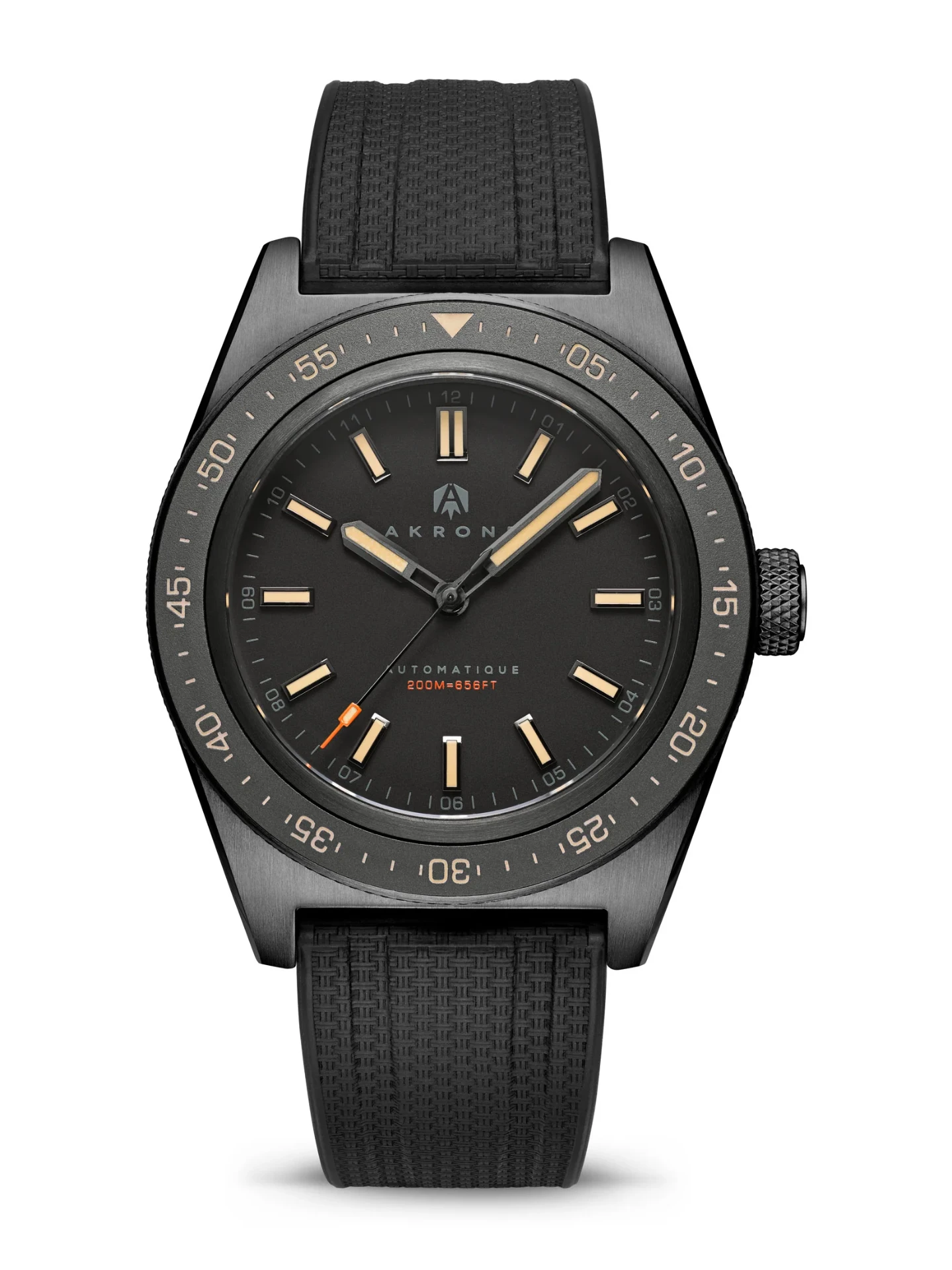
The company has developed watches in cooperation with military personnel, tactical units, pilots and professional divers. Its C-03 collection draws on technical work undertaken for pilots of the French Army Light Aviation, while its C-02 diving watches include models with stated water-resistance ratings of 200 and 300 metres.
The company has also worked with diver Frédéric Swierczynski, known for undertaking demanding technical dives.
These relationships provide Akrone with access to people whose equipment is subjected to conditions very different from those encountered during ordinary daily use.
The company describes visits to military bases and conversations with personnel as some of its most memorable experiences.
For a relatively small independent watchmaker, gaining the confidence of such users has been an important part of building its reputation.
But those relationships have also presented challenges.
Specifications can be demanding, development takes time and professional users are unlikely to be impressed by a product that fails to perform as promised.
The company says that feedback from people using its watches in the field has helped shape successive projects.
One part of its response captures why these encounters matter to the people behind the brand:
"And when they tell us a watch delivered on its promise in the field, it reminds us exactly why we created Akrone."
There is also a charitable dimension to these relationships. Akrone reports having donated more than €100,000 to welfare associations supporting the professional units with which it works.
For a company established only in 2015, that represents a significant commitment to the communities associated with its watches.
Ten months to create a watch
A mechanical watch may be small enough to disappear beneath a shirt cuff, but the process of developing one can take considerably longer than its size suggests.
At Akrone, the work begins with the intended use.
Engineers and designers establish the requirements, develop the design and work with specialist manufacturers to produce components made to their specifications. Movement suppliers may also be asked to accommodate particular technical requirements.
Prototypes are then developed and tested before production proceeds.
According to Akrone, a custom project takes approximately ten months from initial design to delivery.
The final stages take place in Nantes, where the watches are assembled to order, regulated, inspected and tested.
For its three-hand automatic models, Akrone states that the movements are regulated in six positions, with a target accuracy of minus four to plus six seconds per day.
This process reflects a central part of the company's philosophy.
The watch should be an object its owner can continue to use, maintain and repair for years, rather than something that becomes disposable when a newer model appears.
Servicing and after-sales care therefore remain part of the work undertaken at the Nantes workshop.
The distinction between a watch designed to last and one designed primarily to follow the latest fashion is central to the identity Akrone is trying to establish.
And it raises a question that reaches beyond the watch industry.
What makes an object worth keeping?
The watch that started everything
Ask a watchmaker which of its creations matters most, and the answer is not necessarily the newest or most technically advanced.
For Akrone, two models stand out.
The first is the K-01, the company's original watch, distinguished by its ceramic case. It represents the beginning of the business and the moment the founders' ideas became a physical product.
The second is the C-03, a pilot's watch developed from a technical platform created for the French Army Light Aviation.
Both are important for different reasons.
The K-01 represents the decision to establish an independent watch company in the first place. The C-03 demonstrates the professional relationships that have since become central to Akrone's identity.
Together, they offer an insight into the direction the founders have chosen.
One reflects the ambition to create something of their own. The other reflects their belief that the best designs often emerge from working closely with the people who will eventually use them.
It is a particularly interesting approach in an industry where the story behind a watch can sometimes be as important to its owner as the mechanism inside it.
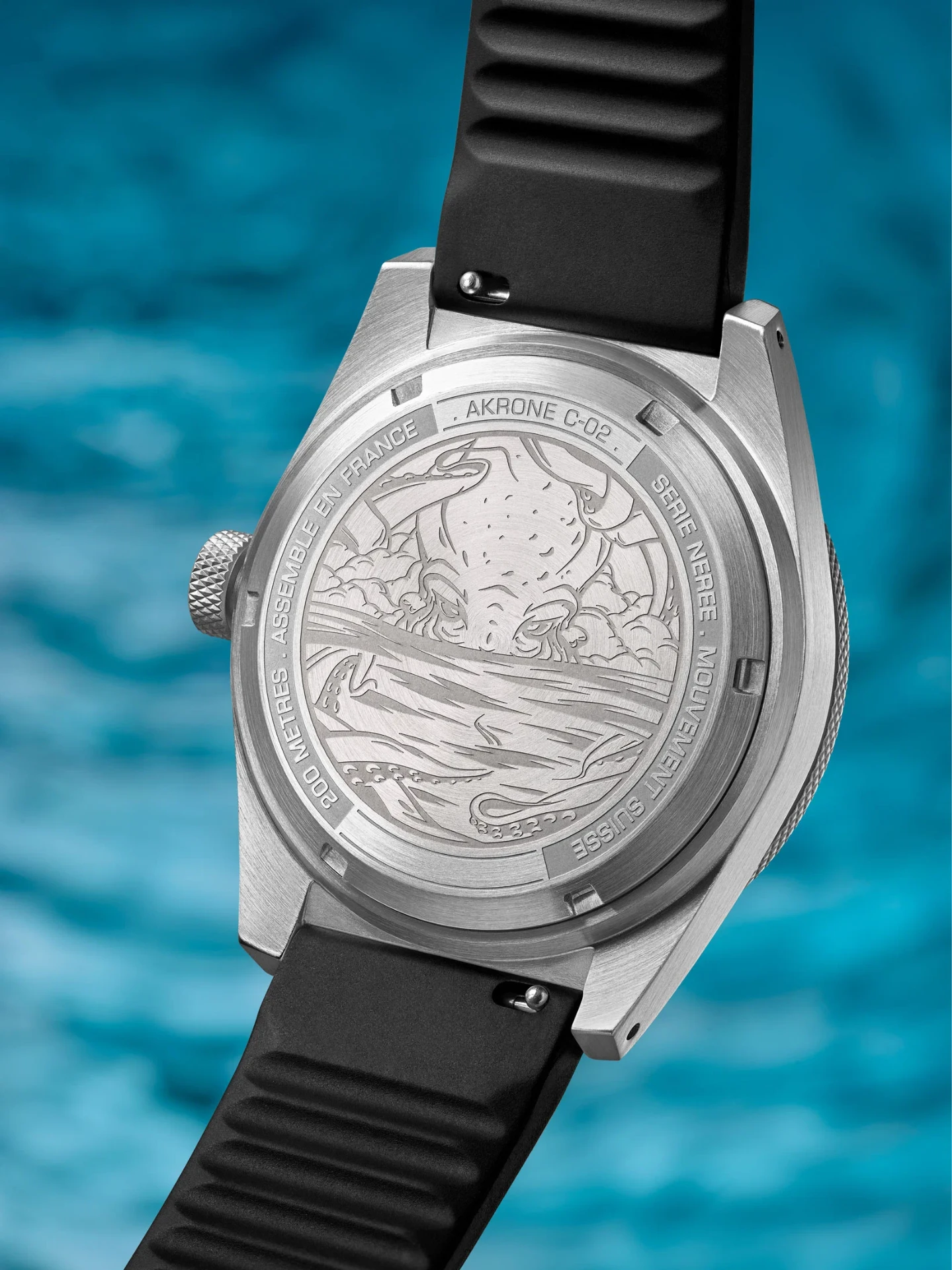
Why wear a mechanical watch at all?
There is an obvious question at the centre of this story.
Why would anyone choose a mechanical wristwatch in 2026?
A smartphone can provide the correct time almost instantly. Modern quartz watches are generally more accurate than mechanical ones. GPS receivers obtain precise time information from satellites.
For most people, owning a mechanical watch is no longer a practical necessity.
Yet the fascination remains.
Perhaps part of the explanation is that a mechanical watch belongs to a different way of thinking about the objects we own.
Inside its case is a collection of precisely manufactured components working together to measure the passing seconds. Energy is stored in a mainspring and released through a regulating mechanism. The movement requires no battery, although it needs winding or sufficient wrist movement, depending on its design.
It is technology that can be understood, maintained and, in many cases, repaired by a skilled watchmaker.
Unlike so many electronic devices, a well-made mechanical watch can remain useful long after the technology surrounding it has changed.
Akrone expresses that attraction rather beautifully:
"A phone tells the time. A mechanical watch is something alive, regulated by a watchmaker, built to last, to be serviced, and to be passed down."
For the founders, the relationship between craftsmanship and longevity is inseparable from the name they chose for their company.
Outside of time.
It is not a promise that a mechanical watch will remain perfectly accurate forever. It is an ambition to produce something whose usefulness and meaning extend beyond the moment it was purchased.
For some owners, that may mean a watch worn throughout a career. For others, it may become an object associated with a particular journey, achievement or chapter of life.
And perhaps that explains why mechanical watches continue to attract attention even as the practical need for them has diminished.
They measure time, but they also acquire a history of their own.
An independent future
When asked where they hope Akrone will be in ten years, the founders do not describe a transformation into one of the world's largest luxury watch companies.
Their ambition is more focused.
They want Akrone to remain independent, continue operating from Nantes and become better known internationally while maintaining its relationship with professional users.
There is something appealing about that ambition.
Remaining independent in a competitive industry requires discipline, especially when larger companies have greater resources for marketing, distribution and development.
It also requires a clear understanding of what makes a smaller business distinctive.
For Akrone, that appears to be the relationship between the workshop, the watch and the person who will eventually wear it.
Rather than attempting to compete with the history of established Swiss manufacturers, the company is building a story of its own.
A story that begins in Nantes, but extends to aircraft, military bases, diving environments and offshore racing yachts.
And, increasingly, to people around the world who appreciate mechanical watches designed around a purpose.
An invitation from Nantes
Our introduction to Akrone has taken place while SeaBee III is moored in Brest, where we have been spending time discovering the people and businesses that make Brittany such an interesting part of France.
The company has invited us to visit its showroom and workshop in Nantes. No visit has taken place at the time of publication.
We hope to meet the team, see the watches and learn more about the work that takes place behind the finished products.
It will also give us the opportunity to explore something that is difficult to appreciate through photographs or written specifications alone: the personal commitment involved in building an independent watch company.
For Sailing SeaBee, Akrone marks the beginning of a new editorial series, Beyond Time, in which we will explore independent watchmakers, the individuals behind them and the enduring connection between craftsmanship and time.
Some of the companies we encounter may have centuries of history. Others may be relatively young. What interests us is understanding why they make the watches they do, who wears them and what those objects have come to represent.
Our own journey will continue to be measured in nautical miles, tidal windows and hours at sea.
But every now and then, it is worth looking beyond the instruments that tell us precisely where we are and considering the people who still believe there is value in making something intended to last.
In Nantes, Erwan Kerneur and Jean-François Kerboul have made that belief the foundation of their business.
And for the first chapter of Beyond Time, it seems a fitting place to begin.
Beyond Time – The Watchmakers
Beyond Time is a Sailing SeaBee Magazine series exploring independent watchmakers, traditional craftsmanship, mechanical timekeeping and the people behind remarkable watches.
Part One: Akrone, Nantes, France
Founded in 2015 by Erwan Kerneur and Jean-François Kerboul, Akrone specialises in purpose-built watches developed in cooperation with professional users. The company designs, assembles, regulates and services its watches in Nantes, working with specialist manufacturers for movements and other components.
Website: akrone.fr